How to Become Disciplined: It's Not About Willpower
Key Takeaways
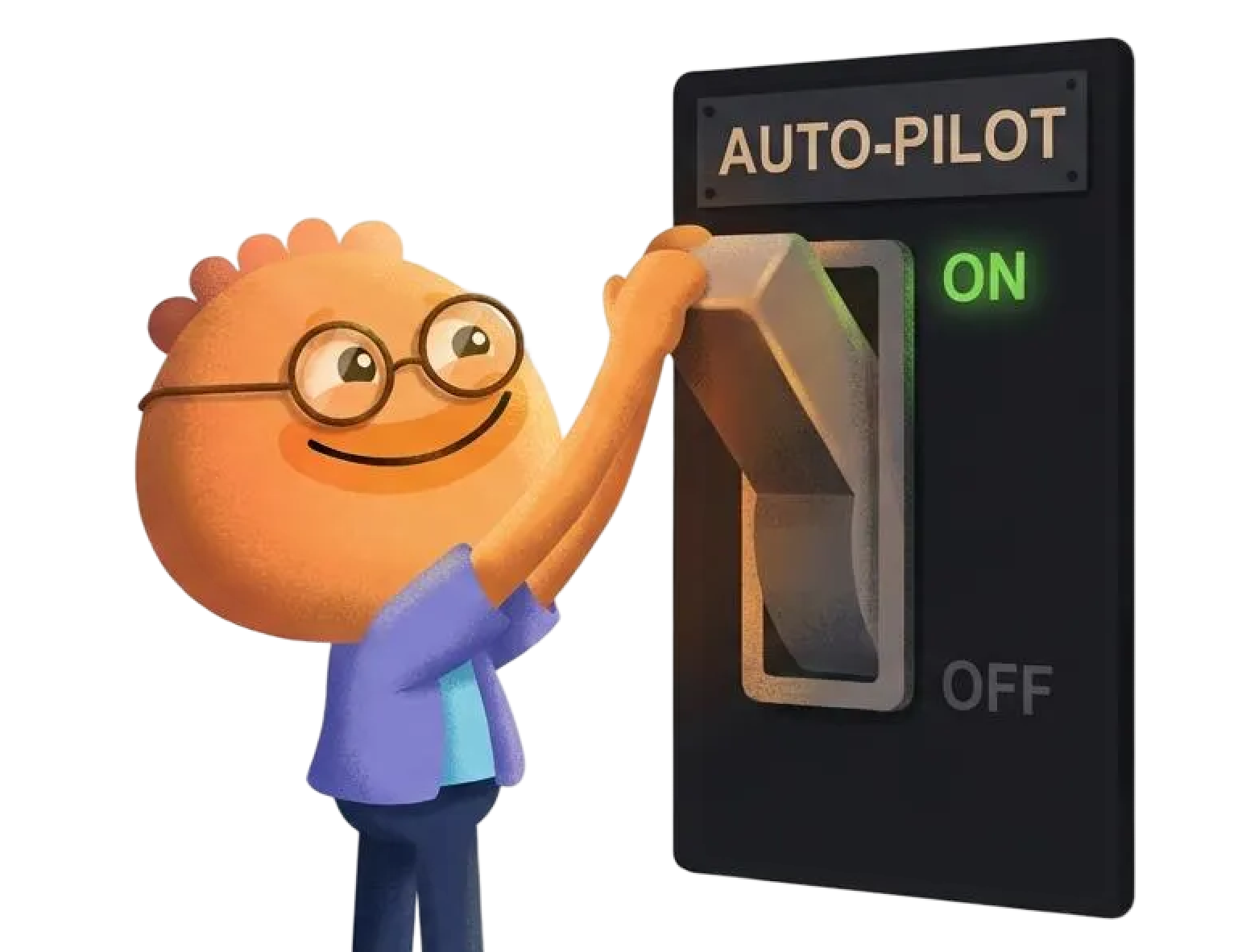
- Discipline is a system, not a character trait. The most disciplined people don't have more willpower. They've built environments and routines that make the right choice automatic.
- Decision fatigue erodes self-control throughout the day. Every trivial choice (what to eat, what to wear, when to start) drains the same resource you need for hard decisions later.
- Habits are automated discipline. Once a behavior becomes a habit, it no longer costs willpower. Building the right habits effectively multiplies your discipline capacity.
- Identity drives consistency. Telling yourself "I am a disciplined person" is more sustainable than white-knuckling through each decision.
The Willpower Myth
You've heard it your whole life. "Just be more disciplined." As if discipline were a switch you could flip, or a muscle you were born without. This advice is everywhere and it's almost entirely wrong.
In 1998, psychologist Roy Baumeister ran a now-famous experiment at Case Western Reserve University. Participants who resisted eating chocolate chip cookies (eating radishes instead) gave up on a subsequent puzzle 60% faster than those who hadn't exerted self-control. The conclusion: willpower is a finite resource. Use it on one thing, and you have less for everything else.
This changes everything about how to become disciplined. If willpower is limited, then trying harder isn't the answer. You need to build systems that require less willpower in the first place.
Think about the people you consider most disciplined. The friend who exercises every morning. The colleague who never misses a deadline. The parent who cooks healthy dinners five nights a week. Ask them about their "incredible willpower" and most will look confused. They don't experience these behaviors as difficult. The behaviors are just what they do. They're habits, routines, and environmental defaults that run without conscious effort.
That's the real secret. The most disciplined people aren't fighting harder battles. They've engineered their lives so fewer battles need fighting. We wrote about this principle in depth in our guide on why systems beat goals, and it applies directly here.
Decision Fatigue: The Hidden Discipline Killer
Every morning you wake up with a full tank of decision-making capacity. Every choice you make burns a little fuel. What to wear. What to eat for breakfast. Whether to check email or start deep work. Which task to tackle first. Whether to respond to that Slack message now or later.
By 3 PM, the tank is running low. By evening, it's often empty.
This isn't a metaphor. A landmark study published in PNAS tracked 1,112 parole decisions made by experienced Israeli judges over ten months. At the start of each session, judges granted parole roughly 65% of the time. Just before a break? That number dropped to nearly 0%. After eating and resting, it jumped right back to 65%.
The judges weren't becoming cruel. They were becoming tired. When decision-making resources are depleted, the brain defaults to the easiest option. For judges, that's denying parole (maintaining the status quo). For you, it's skipping the gym, ordering takeout, and scrolling your phone instead of reading.
How decision fatigue destroys your discipline
Most people front-load their day with decisions. They deliberate over breakfast options, debate outfit choices, negotiate internally about when to start working, and renegotiate after every interruption. Each of these micro-decisions feels trivial. Collectively, they're devastating.
By the time you reach the decisions that actually matter (should I work out? should I cook? should I tackle that hard project?), you've already burned through your daily reserves on things that didn't matter at all.
The fix: eliminate decisions, don't power through them
Steve Jobs wore the same black turtleneck every day. Barack Obama limited himself to two suit colors. This isn't eccentric behavior. It's strategic self-control. Angela Duckworth's research at the University of Pennsylvania found that people who appear highly self-controlled rely on situational strategies (modifying their environment and reducing choices) far more than on raw willpower.
Here's what reducing decisions looks like in practice:
- Meal prep on Sunday. Five days of "what should I eat?" becomes zero decisions.
- Set a daily uniform. Not literally the same outfit, but a rotation that requires no thought.
- Plan tomorrow tonight. Write your three priorities before bed. Morning-you doesn't have to decide what to work on.
- Create "if-then" rules. "If it's 6 AM, I run." No negotiation. No internal debate. The decision was made once, in advance.
A nightly shutdown routine is one of the most effective ways to pre-decide tomorrow's priorities while you still have the mental energy to do it well.
Design Your Environment, Not Your Resolve
Here's a thought experiment. Imagine you're trying to eat healthier. In Scenario A, your kitchen counter has a bowl of fruit and a water pitcher. In Scenario B, it has a box of cookies and a bag of chips. In which scenario do you eat better?
The answer is obvious. But notice what's not different between the two scenarios: you. Same person, same willpower, same intentions. The only thing that changed was the environment.
This is the core insight behind the four laws of behavior change. Make the desired behavior obvious (put the fruit on the counter), attractive (buy fruit you actually enjoy), easy (pre-wash and cut it), and satisfying (notice how good you feel after). Make the undesired behavior invisible, unattractive, hard, and unsatisfying.
Environment design in practice
- Want to exercise in the morning? Sleep in your workout clothes. Set your shoes by the door. Put the coffee maker on a timer so you smell coffee when you wake up. The entire sequence from bed to gym should be frictionless.
- Want to stop scrolling before bed? Charge your phone in a different room. Put a book on your nightstand. Make the unwanted behavior physically harder and the replacement physically easier.
- Want to focus at work? Close your email tab. Put your phone in a drawer. Use a structured anti-procrastination method like implementation intentions to pre-commit to deep work blocks.
- Want to eat better? Don't keep junk food in the house. You can't eat what isn't there. This sounds simplistic, but it works precisely because it removes the decision entirely.
The disciplined person and the undisciplined person often have the same intentions. The difference is that the disciplined person has arranged their world so the right choice is the default choice.
Habits: Discipline on Autopilot
Every habit you build is a decision you never have to make again. That's not just convenient. It's a direct expansion of your discipline capacity.
Think about brushing your teeth. You don't wake up each morning and deliberate: "Should I brush my teeth today? Do I feel motivated enough? Maybe I'll skip it just this once." The behavior is automated. It costs zero willpower.
Now imagine if exercise, healthy eating, focused work, and financial discipline operated the same way. Not as daily negotiations with yourself, but as automatic behaviors that just happen because they're wired into your routine.
That's what building habits that stick actually does. It converts willpower-intensive behaviors into automated ones. The initial investment is real (it takes effort to establish a new habit), but the payoff is permanent. Once the habit is formed, it runs on its own.
Keystone habits: the dominoes that tip everything
Not all habits are equal. Some habits create chain reactions that make other good behaviors easier. These are keystone habits, and they're the highest-leverage targets for building discipline.
The most common keystone habits:
- Exercise. People who exercise regularly also tend to eat better, sleep more, spend less impulsively, and feel more productive. It's not that exercise directly causes all of these. It's that the identity of "someone who works out" ripples into other decisions.
- Making your bed. It sounds trivial, but it creates a sense of completion and order that carries into the next task and the one after that.
- A consistent wake-up time. This single constraint forces your entire schedule into a rhythm. Sleep time adjusts. Morning routine becomes possible. Energy levels become predictable.
- Weekly planning. Spending 20 minutes on Sunday planning the week eliminates dozens of "what should I do now?" decisions over the next five days.
Start with one keystone habit. Let it stabilize for two to three weeks. Then add another. Trying to overhaul everything at once is the fastest path to habit burnout.
The Identity Shortcut
There are two ways to approach discipline. You can try to force yourself to do the right thing every single time (outcome-based discipline). Or you can become the kind of person who naturally does those things (identity-based discipline).
The difference is massive. Outcome-based discipline sounds like: "I need to go to the gym." It's a negotiation. Every day, you're arguing with yourself. Identity-based discipline sounds like: "I'm a person who trains." There's nothing to debate. You just go because that's who you are.
We covered this shift in detail in our piece on identity-based habits. The core mechanism is simple: every action you take is a vote for the type of person you want to become. Show up to the gym three days in a row, and the "I'm a person who trains" identity gets three votes. Skip three days, and "I'm not really a gym person" gets reinforced instead.
The practical application: instead of setting discipline goals ("I will study for 2 hours every day"), adopt discipline identities ("I am a focused student"). Then ask: what would a focused student do right now? The answer is usually obvious. And it feels less like forcing yourself and more like acting consistently with who you are.
The 4-Step Discipline Framework
Pulling everything together, here's a practical framework for building self-discipline without relying on willpower.
Step 1: Reduce your daily decisions
Audit your typical day. Write down every decision you make before noon. You'll be surprised how many are unnecessary. For each one, ask: can this be automated, batched, or pre-decided? Meal prep, outfit planning, morning routines, and weekly task prioritization are the biggest wins.
Step 2: Redesign your environment
Walk through your physical spaces (home, desk, car) and ask: does this environment make the right behavior easy or hard? Move healthy food to eye level. Put your phone charger in a different room. Set up your workspace so that when you sit down, everything you need for deep work is already there and everything that distracts you is out of reach.
Step 3: Install keystone habits
Pick one keystone habit and commit to it for 30 days. Use the two-minute rule to make it so small you can't say no. "Exercise for 30 minutes" becomes "put on my running shoes." Once the habit is established, expand it naturally. Track your streak. The visual proof of consistency reinforces the behavior.
Step 4: Adopt the identity
Write down who you want to become, not what you want to achieve. "I am someone who follows through." "I am someone who takes care of their body." "I am someone who does hard things." When discipline feels hard, ask: what would that person do? Then do it. Each time you follow through, the identity gets stronger.
Discipline Approaches Compared
| Approach | How It Works | Best For | Limitation | Sustainability |
|---|---|---|---|---|
| Willpower (brute force) | Resist temptation through mental effort | Short-term urgent situations | Depletes by evening; unreliable long-term | Low |
| Decision reduction | Eliminate trivial choices to preserve mental energy | People who feel drained by mid-afternoon | Requires upfront planning time | High |
| Environment design | Reshape physical spaces so the default is the desired behavior | Breaking bad habits and starting new ones | Doesn't help with decisions outside your controlled spaces | Very high |
| Habit automation | Convert deliberate choices into automatic routines | Recurring daily behaviors (exercise, eating, focus) | Takes 2+ months to fully automate a new behavior | Very high |
| Identity shift | Adopt the self-concept of a disciplined person so behaviors align naturally | Long-term lifestyle transformation | Slower to take effect; requires consistent evidence | Highest |
The most effective approach isn't any single row in this table. It's combining all of them. Reduce decisions to preserve energy. Design your environment to reduce temptation. Build habits to automate the behaviors that matter. And wrap it all in an identity that makes discipline feel natural instead of forced.
Track Consistency, Not Perfection
Here's where most self-discipline advice goes wrong. It sets up an all-or-nothing standard. Missed a day? You failed. Ate the cookie? You're undisciplined. Skipped the gym? Start over.
This binary thinking is the enemy of real discipline. Real discipline looks messy. It's five good days and two mediocre ones. It's a strong morning routine that occasionally gets disrupted by a sick kid or a bad night's sleep. It's progress measured in weeks and months, not individual days.
When we built Habi, Sabry was deliberate about this. The streak counter doesn't punish you for one missed day. Because a single missed day is noise. Two missed days in a row is a signal. The system is designed to keep you going, not to make you feel like a failure the moment you're human.
Track your keystone habits. Watch the patterns. Celebrate the upward trend, even if individual days aren't perfect. That consistent 80% is infinitely more valuable than a perfect week followed by a total collapse.
Frequently Asked Questions
Is self-discipline a skill or a trait?
Self-discipline is a skill you can build, not a fixed personality trait. Research from Angela Duckworth at the University of Pennsylvania shows that people who appear highly disciplined rely heavily on situational strategies like environment design and habit automation rather than raw willpower. You're not born disciplined or undisciplined. You just haven't installed the right systems yet.
How long does it take to become disciplined?
There's no single timeline because discipline is a collection of habits and systems, not one behavior. Research from University College London found that individual habits take an average of 66 days to become automatic. Building a full disciplined routine, where environment, habits, and identity work together, typically takes 3 to 6 months of consistent effort. The first 2 weeks are the hardest. After that, systems start carrying some of the weight.
What is decision fatigue and how does it affect discipline?
Decision fatigue is the deterioration of decision quality after making many consecutive choices. A landmark study published in PNAS found that Israeli judges granted parole 65% of the time at the start of each session but dropped to nearly 0% before breaks. Every decision throughout your day draws from the same cognitive resources. By evening, your capacity for disciplined choices is depleted. The solution is to reduce total decisions by automating routine choices through habits and pre-planning.
Why do I have no self-discipline?
You probably have more discipline than you think. If you brush your teeth every morning, show up to work on time, or stop at red lights, you're exercising discipline dozens of times daily. The areas where you feel undisciplined are usually areas where you're relying on willpower instead of systems. The fix isn't to become a different person. It's to design your environment, build supporting habits, and reduce the number of decisions required to do the right thing.
What are the best habits for building self-discipline?
Start with keystone habits: single behaviors that create positive chain reactions. The most effective for discipline include a consistent wake-up time (anchors your schedule), a morning routine of 2 to 3 non-negotiable actions, a weekly planning session to pre-decide priorities, and a nightly shutdown ritual. Track consistency rather than perfection. Missing one day doesn't matter. Missing two in a row starts breaking the pattern.
Final Thoughts
Discipline isn't about gritting your teeth harder. It's about building systems that make the right behavior easier than the wrong one. Reduce your decisions. Shape your environment. Automate through habits. Become the identity. These four steps, practiced consistently, will make you appear impossibly disciplined to everyone around you. And the irony is that it won't feel hard at all.
If you want a single tool that ties all of this together, download Habi. Track your keystone habits, build streaks, and watch the evidence of your new disciplined identity stack up day by day.