6 Best Accountability Apps in 2026 (Tested and Compared)

Short on Time? Here's the Quick Take



You know what you should be doing. You're just not doing it. That's not a knowledge problem. It's an accountability problem.
Reminders don't work because you've trained yourself to dismiss them. Streaks don't work because you'll break one on a Tuesday and abandon the whole system by Friday. What actually works is consequences. Real money on the line. A stranger watching you on camera. A friend whose game character takes damage when you skip your workout. Someone who checks in on you every single day.
We tested over 20 accountability apps to find the ones that create genuine follow-through, not just another notification to swipe away. We narrowed it to six. Each uses a fundamentally different approach to accountability: financial stakes, data tracking, body doubling, human coaching, shared collaboration, and group consequences.
Full disclosure: Habi is our app. We built it because our founders (with backgrounds at Microsoft, Life360, Y Combinator, and Amazon) wanted accountability baked into a daily planning tool. No affiliate links. No paid placements. Every app on this list got the same honest evaluation.
Quick Comparison
| App | Best For | Price | Platforms | Our Rating |
|---|---|---|---|---|
| 1. Habi | Best overall | Free (optional Pro) | iOS, iPad, Mac | 4.9/5 |
| 2. stickK | Financial stakes | Free (optional $ stakes) | iOS, Android, Web | 3.0/5 |
| 3. Beeminder | Data-driven accountability | Free / $8-81/mo | iOS, Android, Web | 4.0/5 |
| 4. Focusmate | Body doubling | Free / $7-10/mo | Web (all devices) | 4.5/5 |
| 5. Coach.me | Human coaching | Free / $25/wk coaching | iOS, Android, Web | 3.5/5 |
| 6. Habitica | Group accountability | Free / $5/mo | iOS, Android, Web | 4.0/5 |
How We Evaluated These Apps
Every app was tested against five criteria:
- Accountability mechanism. Does it create real consequences for inaction? A notification is not accountability. Something has to be at stake: money, social standing, a coach's attention, or a friend's HP bar.
- Ease of setup. Can you go from download to "being held accountable" within ten minutes? If the setup process itself requires willpower, the app has already failed.
- Track record. What do long-term users say? We prioritized apps with users who've stuck around for years, not just apps with polished marketing pages.
- Value for money. What's free? What costs money? Is the paid tier genuinely better, or is it just a paywall on features that should be standard?
- Sustainability. Does the app help you build lasting habits, or does it create dependency on the app itself?
We read hundreds of App Store reviews, Reddit threads, Trustpilot feedback, and editorial reviews for each app. Where possible, we used real quotes from actual users.
The 6 Best Accountability Apps
1. Habi - Best Overall
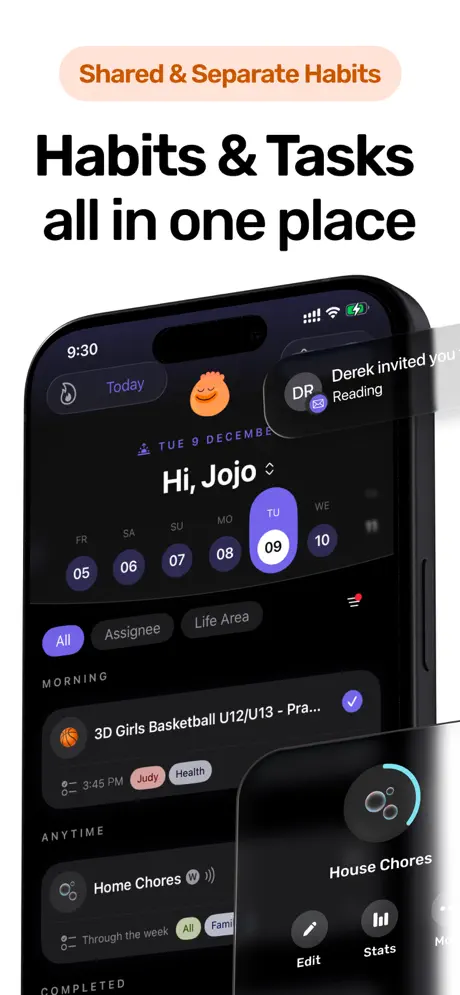
Most accountability apps do one thing. Habi does several and ties them together so the accountability is woven into your actual workflow, not bolted on as a separate step.
The core idea is simple. You track habits, manage projects, run focus sessions, and block distracting apps, all in one place. But the accountability layer is what sets it apart from solo habit trackers. You can invite friends into shared habits and projects, see each other's progress, and gently nudge each other when someone falls behind. One user described it as "accountability without the guilt." Another wrote: "I really love that I am able to organize habits with my friends. Very motivational."
The screen time blocking deserves special attention. While other apps on this list hold you accountable after the fact (you failed, now pay up), Habi blocks the distractions before they happen. During a focus session, distracting apps are locked. You can't doom-scroll your way out of a Pomodoro block. For people whose accountability problem is really a distraction problem, this is the most direct solution on the list.
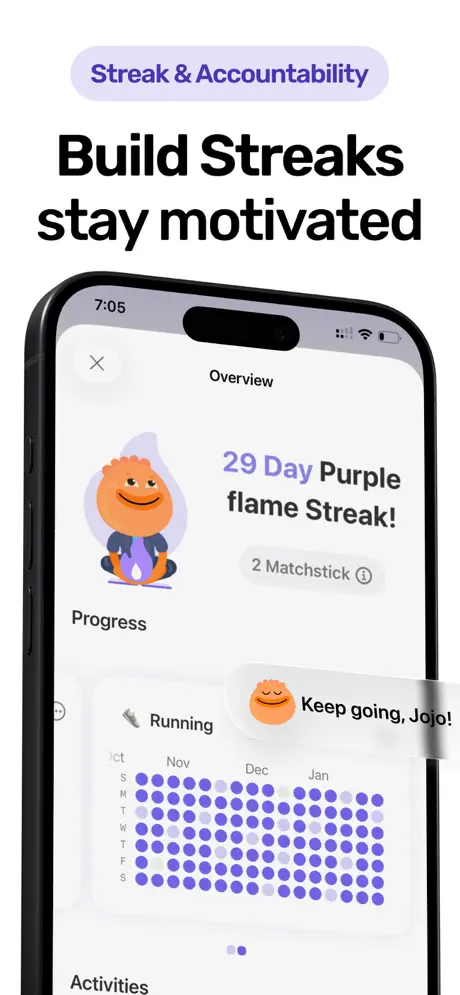
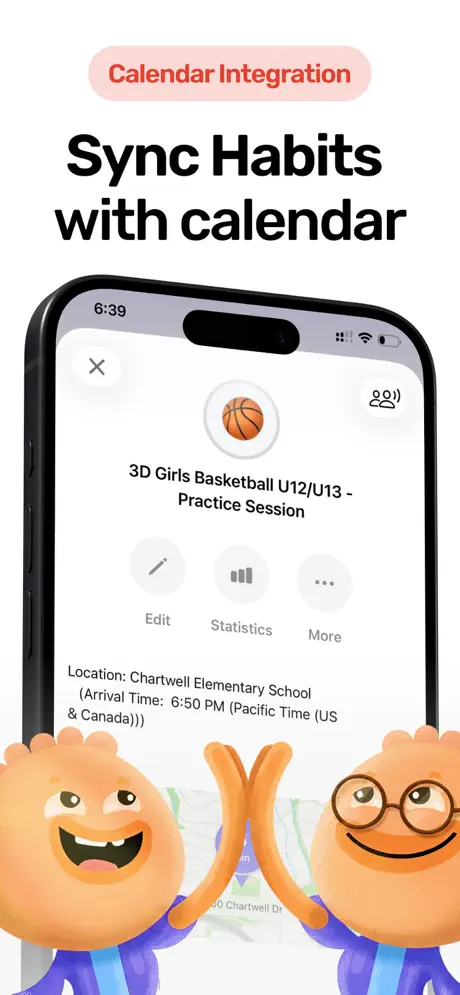
The calendar integration takes it further. Instead of treating habits as floating items you remember to check off, Habi ties them to your actual schedule. "It's weirdly motivating to plan a habit around my schedule instead of hoping I remember," wrote one reviewer. You see your streaks alongside your busy days, which adds context that pure accountability apps lack.
What it does well:
- Shared accountability through collaboration. Invite friends into habits and projects. See each other's stats, nudge each other toward completion. It's lightweight social accountability that doesn't require joining a party, hiring a coach, or betting money.
- Screen time blocking as proactive accountability. Block distracting apps during focus sessions. Other accountability apps punish you for failure. Habi prevents the failure from happening in the first place.
- Focus timer with ambient sounds. Built-in Pomodoro timer paired with white noise, rain, and forest soundscapes. Replaces the need for a separate focus app like Forest or Tide.
- Calendar-driven habit tracking. Habits connect to your real schedule. You see streaks alongside meetings and events, creating a single view of your day that makes missed habits harder to rationalize.
Where it falls short:
- New app with limited reviews. Habi launched in early 2026. It has a 5.0 App Store rating but from a small number of reviewers. Established competitors like Beeminder and Habitica have years of user data and community trust. If social proof matters to you, Habi hasn't earned that yet.
- Apple-only. iPhone, iPad, and Mac. No Android, no web version. If you're on Android or need browser access, Habi isn't an option.
Pricing: Free to use. Optional Pro upgrade ($1.99 to $89.99) unlocks extras, but the core habit tracking, focus timer, collaboration, and screen time blocking all work without paying.
Platforms: iPhone, iPad, Mac (Apple Silicon).
Bottom line: Habi is the best pick for people who want accountability woven into their daily planning, not a separate punishment system. If you'd rather prevent distractions than pay fines for them, give Habi a try.
2. stickK - Best for Financial Stakes
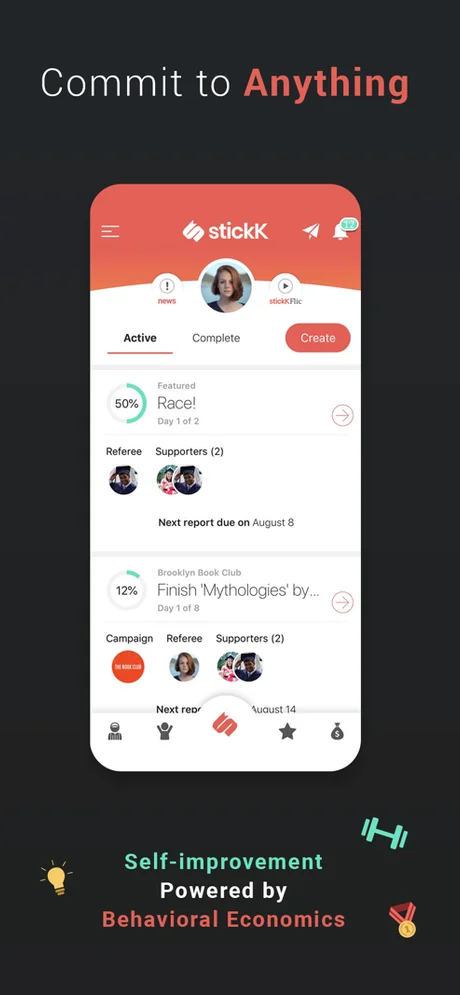
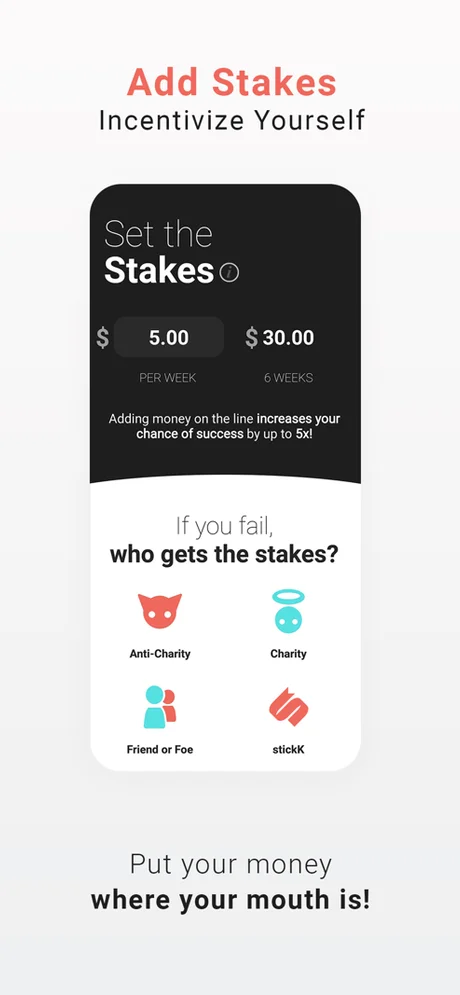
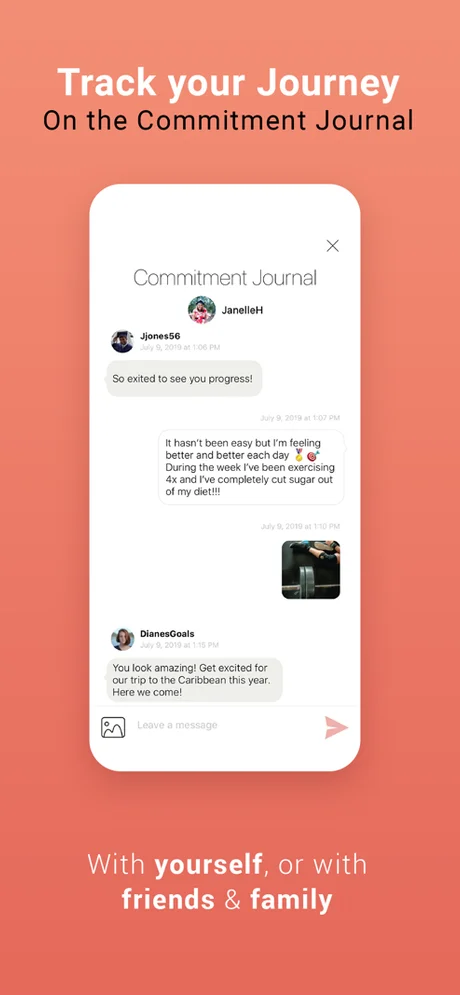
The theory behind stickK is brilliant. Created by Yale behavioral economists, it exploits the single strongest human motivator: loss aversion. You set a goal, put real money on the line, and if you fail, your cash goes to a charity, a friend, or (this is the clever part) an "anti-charity," an organization whose values you oppose.
Imagine being a dedicated environmentalist and knowing that skipping your morning run means $20 goes to a climate-denial lobbying group. That's not a nudge. That's a visceral kick. stickK claims users are 3x more likely to achieve goals when financial stakes are involved, and the academic research behind the concept is published and peer-reviewed.
"I have used StickK every week for over a dozen years. I give major credit to StickK!" wrote one long-term user. Another: "stickK.com is the best app so far I managed to find for keeping you on track, as money commitment increases the chance of success by about 300%." The concept works. Users who embrace it report transformative results.
The problem is the app itself. The concept is a 10. The execution, in 2026, is closer to a 3.
What it does well:
- Anti-charity system. No other app offers this. Designate an organization you oppose as the recipient of your failed stakes. The emotional power of knowing your money supports something you hate is unmatched as a motivational tool.
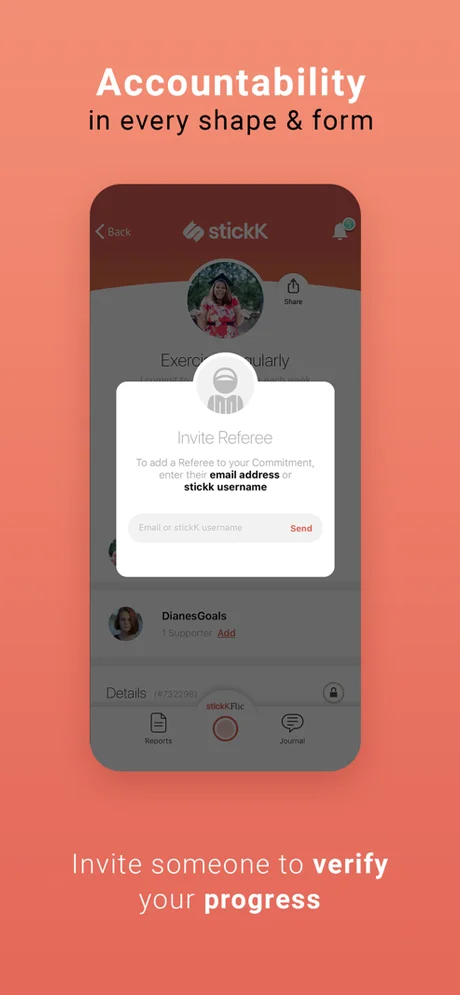
- Referee verification. Appoint a real person to verify your goal completion. This prevents self-reporting dishonesty and adds a social accountability layer on top of the financial one. stickK's own data shows referees double success rates.
- Academic pedigree. Founded by Dean Karlan (Economics, Yale/Northwestern) and Ian Ayres (Law, Yale). The methodology has been featured in 60+ books and 20+ textbooks on behavioral economics. This isn't a startup's guess. It's published research.
- Flexible stake recipients. Send failed-stakes money to a friend, a foe, a charity, or an anti-charity. Four options. Most financial-stakes apps only offer one or two.
Where it falls short:
- Severe app bugs that cost real money. This is not a minor issue. Users report being charged for goals they completed because the app failed to register their reports. "Charged $30 daily despite completing goals," wrote one reviewer. "Glitchy app mistakenly charged me $90. Login prevented reporting. No support response," wrote another. When a free habit tracker crashes, it's annoying. When stickK crashes, you lose money.
- Non-existent customer support. Multiple users across years report zero response to support requests, even when wrongfully charged. "Contacted support three times without response." Trustpilot gives stickK a 2.1 out of 5, dragged down almost entirely by these complaints.
- Persistent login issues. The app logs users out constantly, requiring re-login every session. "Why do I need to sign in every time?" is a refrain across App Store reviews dating back years.
Pricing: Free to create commitment contracts. Financial stakes are optional, starting at $5 per reporting period. No premium subscription. stickK does not appear to take a cut of stakes.
Platforms: iPhone, Android, Web.
Bottom line: stickK's concept is the most psychologically powerful on this list. If the app worked reliably, it would be the top pick. But an accountability app that wrongly charges you and then ignores your support requests isn't just buggy; it's broken trust. Use it through the website if you can tolerate the rough edges. Avoid putting large sums at risk until the app stabilizes.
3. Beeminder - Best for Data-Driven Accountability
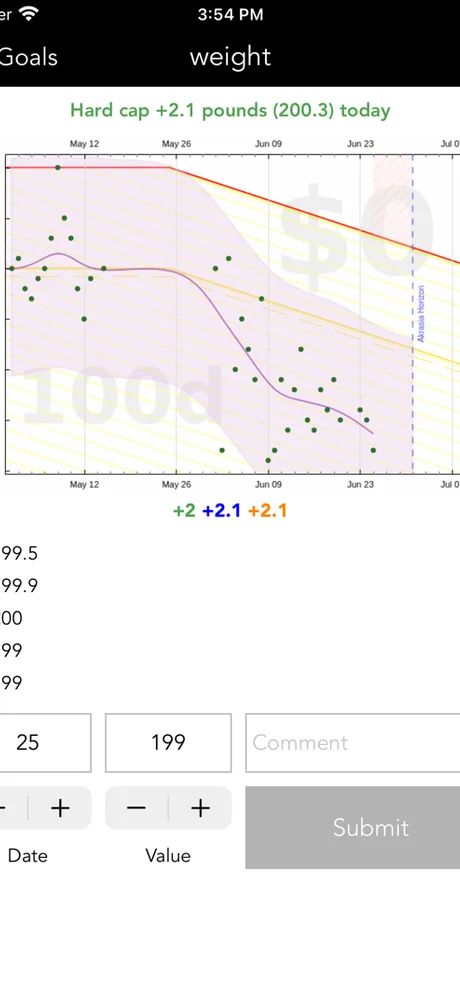
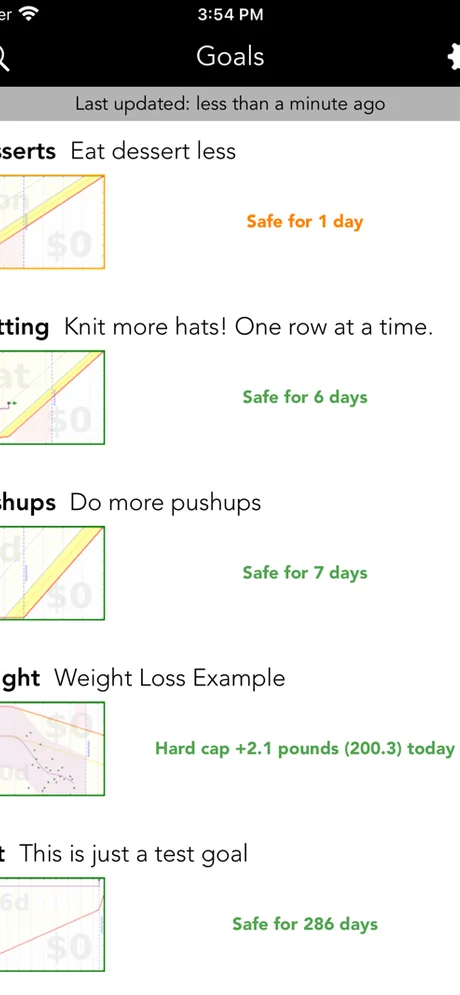
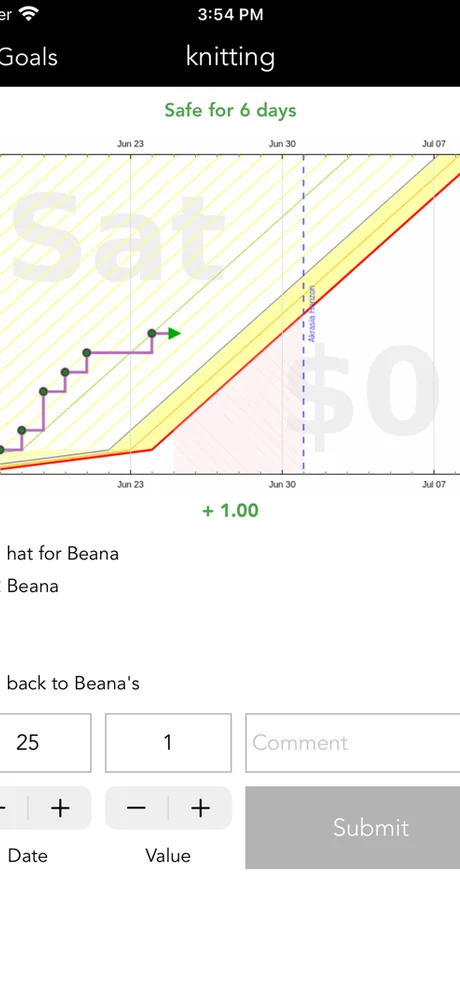
Where stickK uses commitment contracts, Beeminder uses data. Every goal must be quantifiable. Every metric gets graphed on a "Yellow Brick Road," a bright red line showing the minimum pace you've committed to. Stay on the right side and you pay nothing. Cross the line and your credit card gets charged. Automatically.
The tagline is "Fighting irrationality with irrationality," and it captures the philosophy perfectly. Beeminder acknowledges that paying money for failing at your goals is irrational. But so is scrolling social media for three hours when you have a thesis due. One irrationality cancels the other. "Nothing worked. Until I found this," wrote one App Store reviewer. Another called it "the most transformative app in existence."
What makes Beeminder different from stickK is the data layer. It connects to 40+ services: Fitbit, Apple Health, Duolingo, GitHub, Strava, Garmin, Toggl, even YNAB. These integrations pull data automatically, so you can't lie about whether you exercised or coded today. The system knows.
The pledge schedule escalates: $5, then $10, $30, $90, $270, $810, up to $2,430. Each time you fail ("derail"), the next failure costs more. This escalation is the genius. Missing once is cheap. Missing repeatedly becomes genuinely painful.
What it does well:
- Automatic data from 40+ integrations. Apple Health, Fitbit, Duolingo, GitHub, Strava, and dozens more. Your progress is tracked without manual input, which eliminates the temptation to fudge numbers. "The Apple Health interoperability is also great!" wrote one reviewer.
- The Akrasia Horizon. You can't weaken a goal in the heat of the moment. All changes require a one-week advance commitment. This prevents the classic 2 AM decision to "just relax the goal a bit." Behavioral economists call this a commitment device. Beeminder calls it the Akrasia Horizon.
- Escalating pledge schedule. First failure costs $5. Each subsequent failure doubles or triples the penalty. Long-term users report this is what keeps them honest years later. "I paid for a lifetime subscription. I've been using the app for about 5 years," wrote one reviewer.
- Responsive support team. Unlike stickK, Beeminder's small team is consistently praised for personal, fast customer service. Legitimate derailments (illness, technical issues) can be reported and refunded.
Where it falls short:
- The app is a thin shell around the website. Most setup and goal management must be done on beeminder.com. "You have to do almost everything on their website. Signing up, payment, add/manage goals, all have to be done on their website," wrote a frustrated reviewer. The mobile app shows your graphs and lets you enter data, but that's about it.
- Dated, ugly interface. The UI is functional but widely described as unattractive. "The UI is incredibly outdated" is a common refrain. If design matters to you, Beeminder will feel like a tool from 2012 (because it is).
- Integration bugs can cost real money. Automatic data syncing occasionally fails, causing false derailments. "I had nothing but problems with all three [automatic integrations] including false derailments," wrote one user. The support team handles these, but it still creates anxiety.
Pricing: Free tier with a small number of active goals. Derailment charges ($5 first offense, escalating). Premium plans: Infinibee at $8/month (unlimited goals), Bee Plus at $16/month (custom goals, weekends off), Beemium at $81/month (charity donation option, goals without pledges).
Platforms: iPhone, iPad, Mac (Apple Silicon), Android, Web.
Bottom line: Beeminder is the most effective accountability app for people who are data-driven and loss-averse. If spreadsheets excite you and losing $30 to your own laziness would ruin your week, this is your app. Just accept that the interface won't win any design awards.
4. Focusmate - Best for Body Doubling
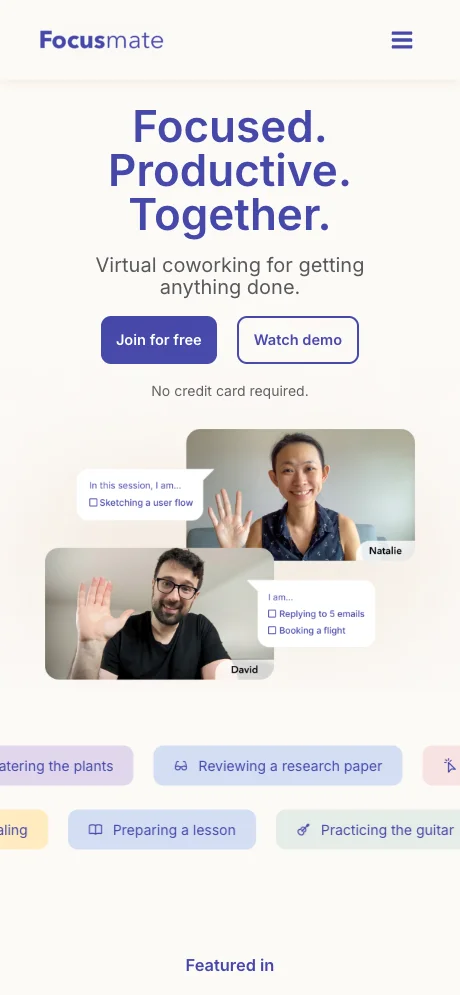
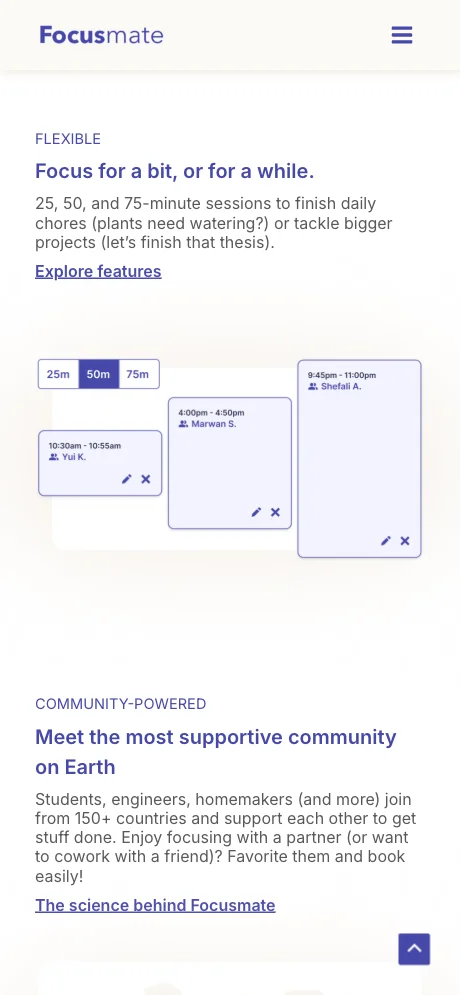
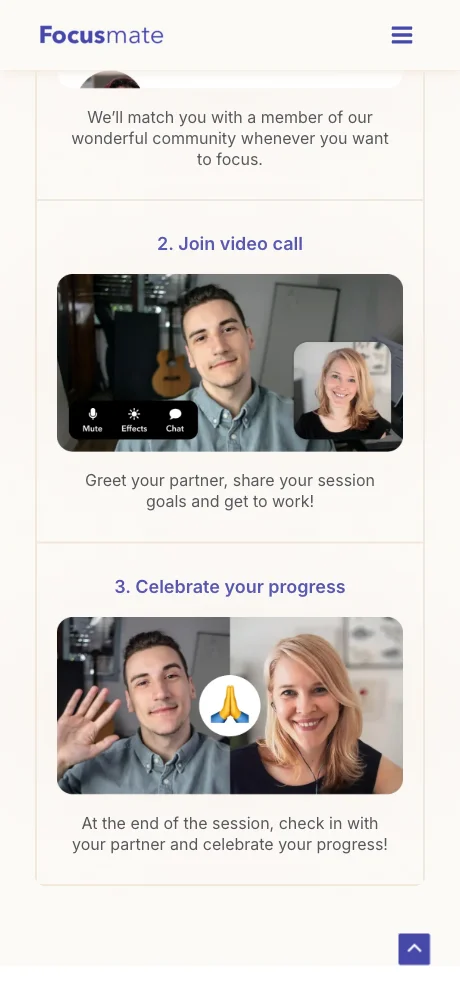
Every other app on this list works through consequences: money lost, characters damaged, coaches disappointed. Focusmate works through presence. You book a 25, 50, or 75-minute session, get paired with a stranger via video, declare what you'll work on, and then work silently together on camera. That's it. No chat. No gamification. No money at risk. Just another human watching you.
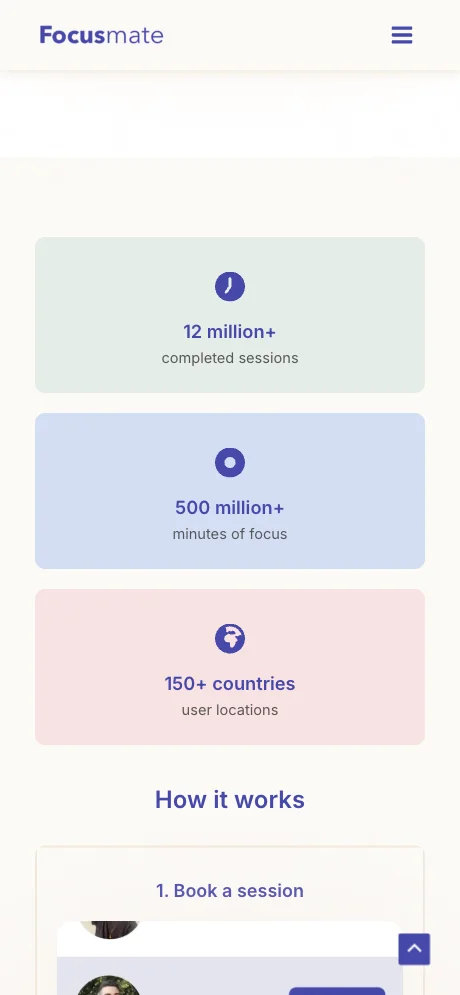
It sounds absurd. It works spectacularly. Focusmate reports a 161% average productivity increase among users. The platform has a 4.9/5 on Trustpilot from 266 reviews, with 98% giving five stars. Those numbers are almost unheard of for a productivity tool.
"My productivity has literally gone up 100%. It has been literally life changing for me," wrote one user. An ADHD coach reported: "The word I hear most often from my clients is GAMECHANGER." A reporter from MEL Magazine tested it for a full day, finished an article five hours faster than usual, and concluded simply: "It works."
The science is body doubling, a technique rooted in ADHD therapy. Working alongside another person triggers dopamine (task completion), serotonin (social acknowledgment), and oxytocin (human connection). Your brain treats the stranger on camera as a coworker, and the social contract of having declared your task makes quitting feel like breaking a promise.
What it does well:
- Instant accountability with zero setup. No friends to recruit. No contracts to sign. No money to risk. Book a session, show up, work. The stranger on the other end of the video creates immediate external accountability. "Super easy to use and very effective for body doubling," wrote one reviewer.
- 24/7 global availability. With users in 150+ countries, sessions are available at any hour. One power user with over 3,000 sessions wrote: "I've gained SO much productivity focusing with strangers from over 19 countries across six continents."
- Especially effective for ADHD. Focusmate is the most recommended accountability tool in ADHD communities. The body doubling mechanism directly addresses task initiation, the core ADHD struggle. "Every ADHDer should know about Focusmate! I wish I'd known about it sooner," wrote one Trustpilot reviewer.
- Task-agnostic. Works for coding, writing, studying, cleaning, filing taxes, cooking. Any task where starting is the hard part. "I assembled my tax documents in six sessions," wrote one user.
Where it falls short:
- Requires a webcam and quiet space. You need to be on camera for the full session. If you work in a noisy environment, share an office, or are simply uncomfortable being watched, Focusmate won't work for you.
- No-shows happen. Some partners don't show up or arrive late, disrupting your flow. "Booked another session. Person turned up late. Couldn't get her camera on for 5 minutes. Then interrupted my session," wrote a frustrated reviewer. The platform tracks attendance scores to reduce this, but it's not eliminated.
- Web-only. No native mobile app. Sessions run in a browser, which works fine on desktop but can be clunky on phones and tablets.
Pricing: Free (3 sessions per week). Plus plan at $9.99/month, or $6.99/month billed annually, for unlimited sessions. No credit card required for the free tier.
Platforms: Web browser (Chrome, Safari, Edge) on Windows, Mac, Linux, and mobile. No native app.
Bottom line: Focusmate is the most pleasant accountability app on this list. No money lost, no damage dealt, no coach nagging. Just a quiet human presence that makes you want to do your best work. If your accountability problem is really a "can't start" problem, try three free sessions. You'll know immediately if it's for you.
5. Coach.me - Best for Human Coaching
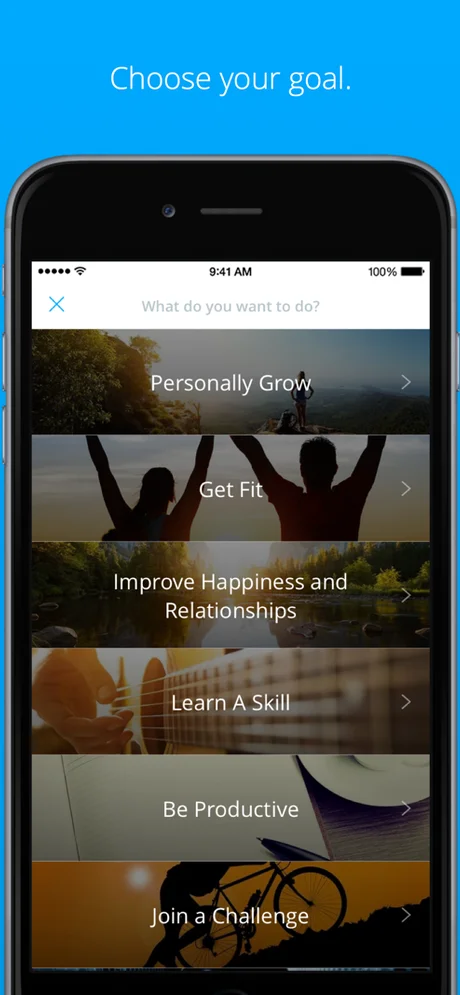
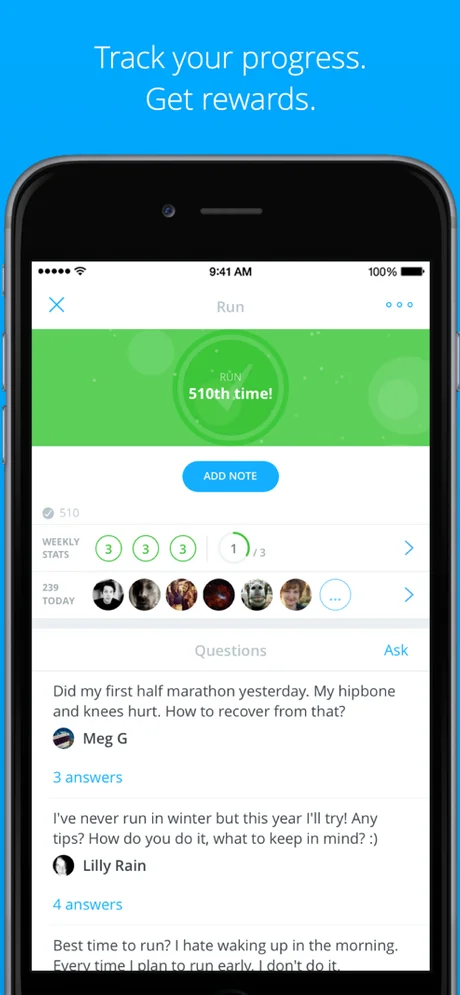
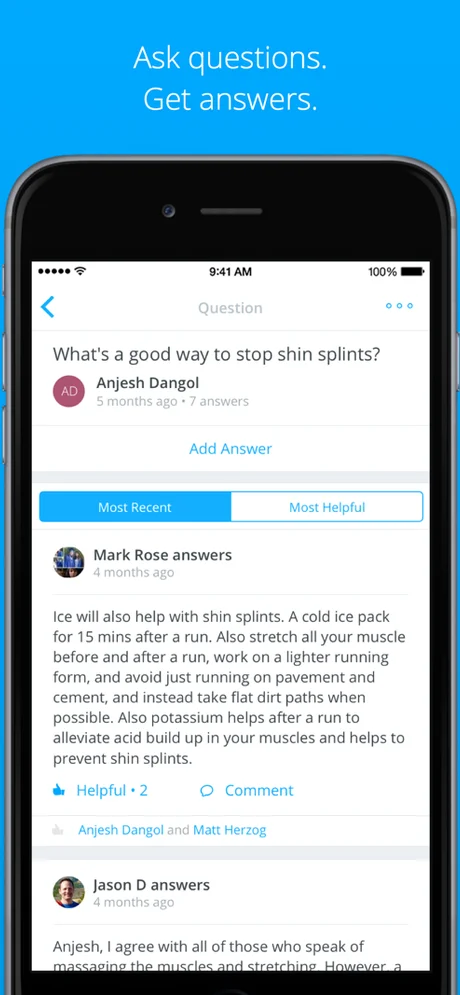
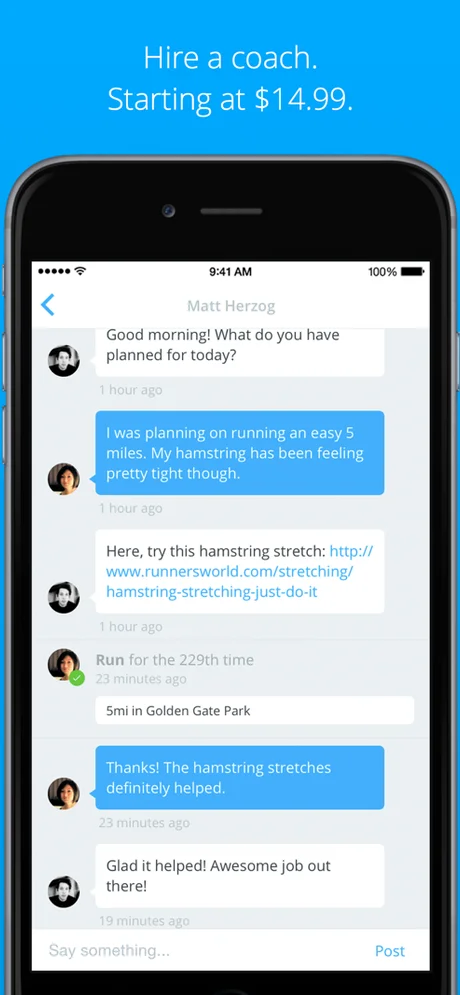
Every other app on this list uses technology as the accountability mechanism: algorithms, game mechanics, financial automation, video matching. Coach.me uses a real human being. You hire a coach who checks in on you daily through in-app chat, helps you troubleshoot challenges, and adapts their guidance to your specific situation. No algorithm can do that.
The platform started in 2012 as "Lift," a simple habit tracking app. It pivoted to include a coaching marketplace, and that's what makes it unique today. The free tier is a solid habit tracker with daily check-ins, streaks, and community support through "props" (likes from other users). The paid tier connects you with one of 95 active coaches across fitness, business, mental health, and personal development.
"It's pretty incredible how much I got for just the $25/week. My perspective on life completely changed," wrote one user. Another maintained a 1,176-day streak and credited the app with transforming their approach to goal-setting. The coaching format works because it adapts. An app sends the same notification whether you're having a great week or falling apart. A coach notices the difference.
The catch: not all coaches deliver. Some send generic, automated messages. "The coach just sends automated canned messages that didn't even seem to be tailored to me," wrote one disappointed reviewer. Reddit users report needing to try "at least 5 coaches" to find a great one. When you find a good match, it's transformative. When you don't, it's an expensive text message.
What it does well:
- Real human coaching for $25/week. That's a fraction of what standalone life coaching costs ($150-300/session). Coaches provide daily chat-based check-ins, personalized strategies, and the kind of empathetic accountability that no app or algorithm can replicate.
- Three-tier accountability system. Free self-tracking with streaks, free community support through props and Q&A, and paid one-on-one coaching. You can escalate your accountability level as your needs grow. Start free, add a coach when you're ready.
- Long track record. Active since 2012. Some users report 10+ year histories. "My favorite app. Have been using this for 6 years every single day!!" wrote one reviewer. That longevity means the system works for people who commit to it.
- Community accountability. Even without paying, the props system creates lightweight social motivation. Seeing others check in on the same goals builds a sense of shared effort.
Where it falls short:
- App stability issues. This is the biggest problem. The app has a chronic history of crashing and freezing, especially on newer iOS versions. "Been using this app for longer than I can remember, over a decade. And now it freezes," wrote one longtime user. A 2025 rebuild claims to have fixed this, but recent reviews are mixed.
- Inconsistent coach quality. The marketplace model means coach quality varies wildly. Some coaches are excellent. Others send canned messages and collect their fee. "Paid Coaching Is A Joke," titled one 1-star review. There's no way to know before you pay.
- Data loss and streak resets. Some users report random deletion of check-ins and broken streaks. "Most recently, a 1000+ day streak was erased," wrote one. For an accountability app built on streaks, losing streak data is unforgivable.
Pricing: Free (unlimited habits, check-ins, streaks, community). Individual coaching at $25/week or $87/month. High-Impact Leadership Coaching at $249/month.
Platforms: iPhone, Android, Web.
Bottom line: Coach.me is the right choice if you want a real person in your corner, not just an algorithm. Budget for trying a few coaches before finding your match, and be prepared for an app experience that's rougher than most. The coaching can be worth it. The app makes you earn that patience.
6. Habitica - Best for Group Accountability
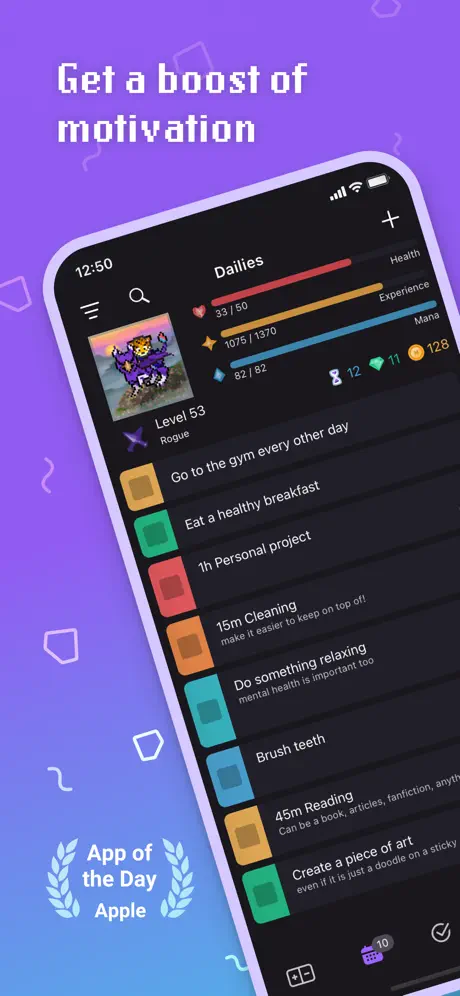
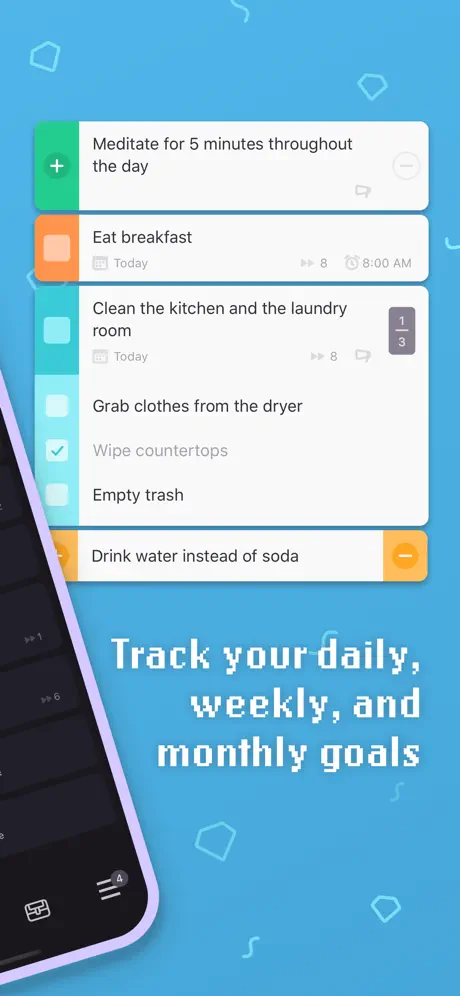
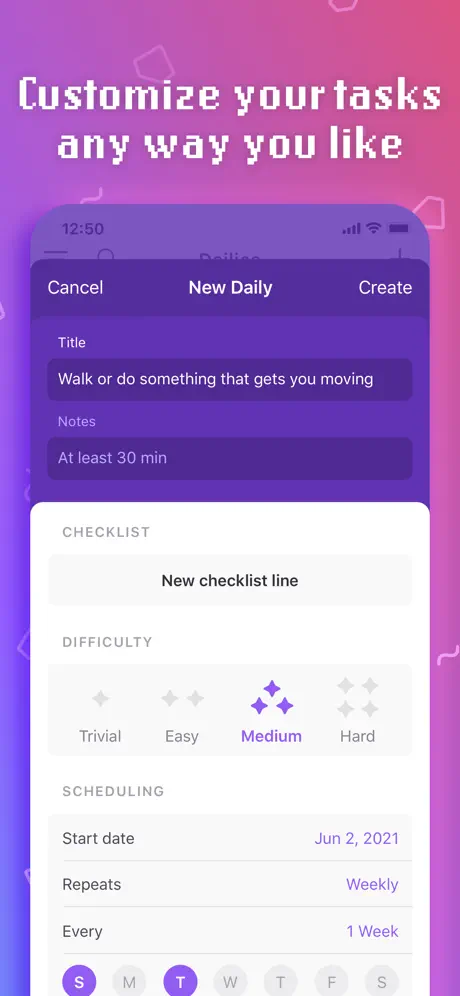
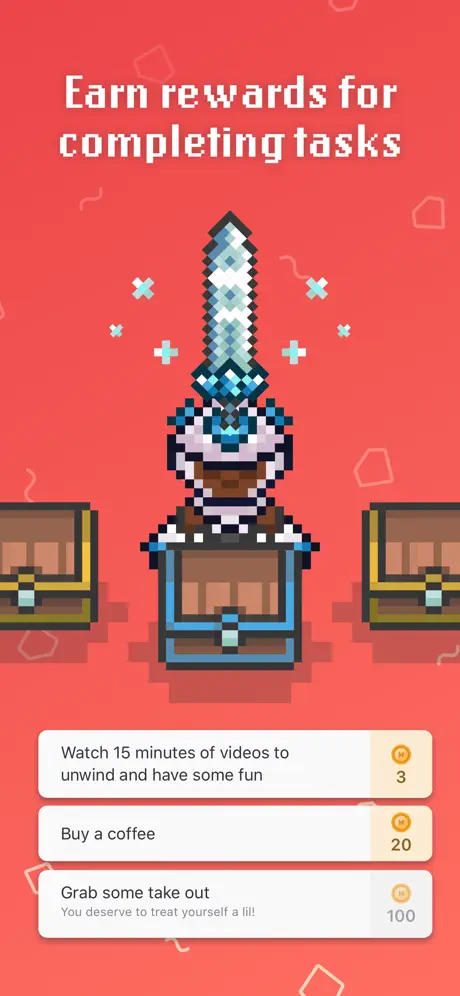
Your procrastination literally hurts your friends. That's not a metaphor. In Habitica, when you skip your daily tasks, the boss attacks every member of your party. Their characters lose HP. They can lose levels. They can die. Your negligence, their consequences.
This is the most hardcore accountability mechanism in any habit app. stickK takes your money. Beeminder takes your money. Focusmate has someone watch you. But Habitica is the only app where failing your commitments directly punishes the people you care about. "I'm in a party with cool people and the whole 'do your stuff so you don't get your mates killed' really works on me!" wrote one reviewer, who credited the system with getting them to shower regularly during a bout of clinical depression.
The party system supports up to 30 members. You fight bosses together by completing your real-life dailies, habits, and to-dos. Each completed task deals damage to the boss. Missed tasks cause the boss to counterattack the entire party. Class roles (Warrior, Mage, Healer, Rogue) create genuine interdependence. The Healer restores party HP after someone has a bad day. The Warrior deals heavy damage to finish bosses faster. It's cooperative accountability wrapped in fantasy framing, and the framing makes the social pressure feel like gameplay instead of guilt.
"My friends and I use this to stay motivated and keep each other accountable," wrote a January 2026 reviewer. "I know it's just an RPG that can easily be cheated, but somehow we don't want to cheat and the game keeps us engaged." That's the key insight. The honor system works because letting down your party feels worse than letting down yourself.
What it does well:
- Shared-consequence boss fights. When one member misses their dailies, the boss attacks everyone. Constitution doesn't reduce boss damage. There's no hiding. "When you and friends make a party together, your negligence to do your tasks can affect the party," wrote one reviewer. No other habit app creates this level of mutual accountability.
- Class-based team roles. Healers, Warriors, Mages, and Rogues serve distinct functions in boss fights. This creates real interdependence beyond "we're all tracking habits." Your role matters to the group's survival.
- Community challenges. Join structured goal sets created by other users (fitness, reading, study habits, mental health). Challenge creators can monitor participant completion rates. It's more organized than a simple "invite a friend" feature.
- The Inn as a safety valve. Players can "rest in the Inn" during vacations, illness, or mental health breaks to pause all damage. This prevents the accountability system from becoming punitive during legitimate absences.
Where it falls short:
- Finding a party is harder since the guild removal. In August 2023, Habitica removed guilds, the large interest-based communities where players discovered accountability partners organically. "I loved Habitica for its community and the guilds you could join. Now that those are gone..." wrote a 10-year user who was leaving the platform. You now need to know people IRL or use a basic matchmaker to find a party.
- Accountability pressure can backfire. The very mechanic that motivates some users creates anxiety for others. "Bullied out of a party for not wanting to join a challenge due to my mental health," wrote one reviewer. If group pressure triggers stress rather than motivation, Habitica's core mechanic works against you.
- Mobile app lags behind the web version. Social features like finding parties, managing challenges, and viewing member details are buried in menus or missing entirely on mobile. The web experience at habitica.com is significantly better.
Pricing: Free (all core features including parties, boss fights, challenges, class system). Optional subscription at $4.99/month for cosmetic perks only. Group Plans at $9/month + $3/member for shared taskboards.
Platforms: iPhone, Android, Web.
Bottom line: Habitica is the only accountability app where your failure has consequences for other people, not just yourself. If you have friends willing to join a party and you respond well to "don't let the team down" pressure, nothing else on this list comes close. For more on Habitica's features, see our habit tracker apps comparison or our Habitica alternatives guide.
Which Accountability App Should You Pick?
The best accountability app depends on what kind of pressure makes you follow through. Here's the short version:
- If you want accountability built into your daily planning: pick Habi. Shared habits, focus timer, screen time blocking, and collaboration in one app. Best for people who want to prevent failure, not just punish it.
- If losing money is the only thing that motivates you: pick stickK for anti-charity stakes or Beeminder for data-tracked escalating penalties. stickK has the more powerful concept. Beeminder has the more reliable app.
- If you just need someone watching to get started: pick Focusmate. Three free sessions per week. No setup. No money at risk. The most pleasant accountability experience on this list.
- If you want a real human checking on you daily: pick Coach.me. At $25/week, it's the most affordable personal coaching option. Budget for trying a few coaches before finding your match.
- If you have friends who'll join you: pick Habitica. The party boss fight system creates the strongest peer accountability of any app. It's free, and the social contract is real.
For broader comparisons, see our goal tracker roundup and our habit tracker apps comparison.
Frequently Asked Questions
What is an accountability app?
An accountability app is software designed to help you follow through on goals by adding external consequences or social pressure. Some use financial penalties (Beeminder, stickK), others use virtual coworking (Focusmate), and others use shared progress tracking with friends or coaches (Habi, Coach.me, Habitica). The common thread is that they go beyond simple reminders by making someone or something else aware of whether you showed up.
Do accountability apps actually work?
Research says yes, with caveats. The American Society of Training and Development found that having a specific accountability appointment with someone increases your chance of completing a goal to 95%, compared to 65% for just committing to someone. Financial-stakes apps like stickK report users are 3x more likely to achieve goals when money is on the line. Focusmate users report a 161% average productivity increase. The key factor is matching the accountability type to your personality. Financial penalties work for loss-averse people. Social presence works for those who thrive with others watching. Human coaching works when you need personalized guidance.
Can accountability apps help with ADHD?
Many users with ADHD report that accountability apps are more effective than traditional habit trackers. Focusmate is especially popular in ADHD communities because body doubling helps with task initiation, which is the core ADHD struggle. Beeminder's financial stakes create the urgency that ADHD brains need. Habitica's boss fight system provides immediate external consequences. Habi's screen time blocking helps manage ADHD-related phone distractions. The common thread: accountability apps add external structure that compensates for executive function challenges.
What's the best free accountability app?
Habitica offers the most features for free: party boss fights, challenges, habit tracking, and the full class system cost nothing. The subscription is cosmetic only. Habi is also free for core habit tracking, focus timer, screen time blocking, and shared collaboration. Focusmate's free tier gives you three body-doubling sessions per week, which is enough for many users. Coach.me offers free unlimited habit tracking with community support.
What's the difference between an accountability app and a habit tracker?
A habit tracker records what you do. An accountability app creates consequences for what you don't do. Most habit trackers rely on internal motivation: streaks, charts, and personal satisfaction. Accountability apps add external pressure: real money lost (Beeminder), someone watching you work (Focusmate), a coach checking on you (Coach.me), or friends whose characters take damage when you skip tasks (Habitica). Some apps like Habi blend both approaches, combining habit tracking with shared collaboration and screen time blocking. The best choice depends on whether you need a record or a push.
Final Thoughts
Accountability apps work because they solve the real problem: not what to do, but actually doing it. Notifications and streaks rely on your willpower. These six apps bring something external to the table, whether that's money, a stranger's presence, a coach's daily check-in, or a friend whose character just died because you skipped leg day.
None of them are perfect. stickK's concept is brilliant but the app is falling apart. Beeminder looks like it was designed in 2012. Focusmate requires a webcam and a quiet room. Coach.me crashes. Habitica lost its guilds. But each one offers something no habit tracker can: a reason to follow through that exists outside your own head.
If you want to start today, try Habi. It's free, takes two minutes to set up, and your data stays on your device. If you're curious about the deeper habits science, read our guide on how to build habits that stick.