7 Best Self Care Apps in 2026 (Tested and Compared)

Short on Time? Here's the Quick Take






You told yourself you'd meditate this morning. Journal before bed. Take a walk at lunch. Instead, you opened your phone, scrolled for forty minutes, and the day slipped past without a single intentional pause.
Self-care isn't bubble baths and face masks. It's the daily, small practices that keep you functioning: checking in with your mood, taking a few deep breaths when stress spikes, writing down one thing you're grateful for. The National Institute of Mental Health recommends regular exercise, relaxation practices like meditation, and daily gratitude as core self-care strategies for mental health.
The problem is remembering to do them. That's where self care apps come in.
We spent three weeks testing 15+ self-care apps across mood tracking, meditation, journaling, breathing exercises, and gratitude. We read hundreds of App Store reviews, dug through Reddit threads, and tracked which apps people actually stick with past the first month. Then we narrowed it down to seven.
Full disclosure: Habi is our app. We included it because we believe it genuinely belongs on this list for its self-care approach to habit building. Every app here got the same honest treatment. No affiliate links. No paid placements.
If you want a deeper look at staying motivated, we've covered that separately. This guide focuses specifically on apps that help you take better care of yourself, day after day.
Quick Comparison
| App | Best For | Price | Platforms | Rating |
|---|---|---|---|---|
| 1. Habi | Self-care through habits | Free (optional Pro) | iOS, Mac, Watch | 5.0/5 |
| 2. Calm | Sleep and relaxation | Free / $69.99/yr | iOS, Android | 4.8/5 |
| 3. Headspace | Guided meditation | Free / $69.99/yr | iOS, Android, Web | 4.8/5 |
| 4. Finch | Gentle motivation | Free / ~$15/yr | iOS, Android | 4.9/5 |
| 5. Bearable | Symptom and mood tracking | Free / $34.99/yr | iOS, Android | 4.8/5 |
| 6. Daylio | Micro-journaling | Free / $35.99/yr | iOS, Android | 4.8/5 |
| 7. Gratitude | Positive mindset | Free / $29.99/yr | iOS, Android | 4.9/5 |
How We Evaluated These Apps
Every app on this list was tested for at least two weeks of daily use. We looked at six things:
- Self-care depth. Does it offer meaningful tools for emotional well-being? Mood tracking, breathing exercises, journaling, meditation, gratitude prompts?
- Daily friction. How many taps to complete a check-in? If it takes more than 30 seconds, people stop doing it.
- Pattern recognition. Can it show you trends over time? A study in JMIR Mental Health found that mood-tracking apps help users build self-awareness by visualizing emotional patterns they'd otherwise miss.
- Pricing fairness. Is the free tier genuinely usable, or does it exist only to funnel you into a subscription?
- Real user retention. What do people say after three months, not three days? We prioritized apps with long-term user testimonials.
- Privacy. What data does the app collect? Who sees it?
No affiliate links in this article. No app paid to be here.
The 7 Best Self Care Apps
1. Habi - Best for Self-Care Through Habits
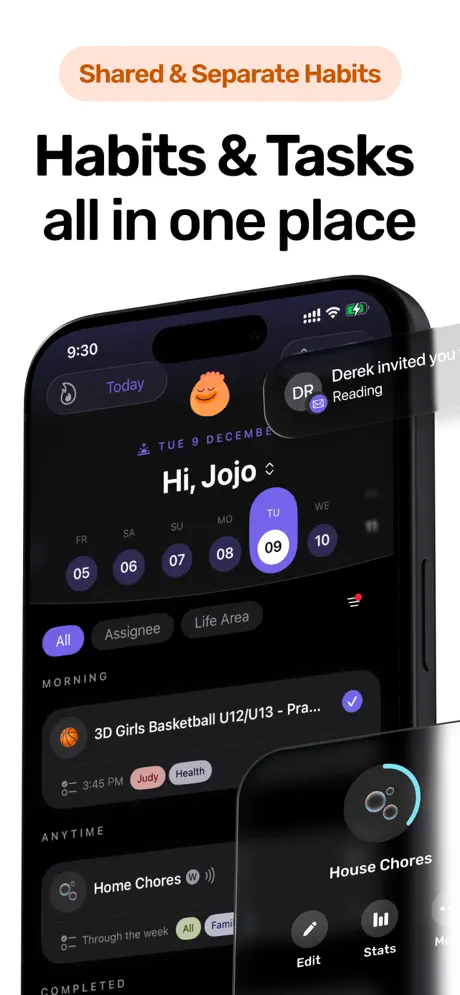
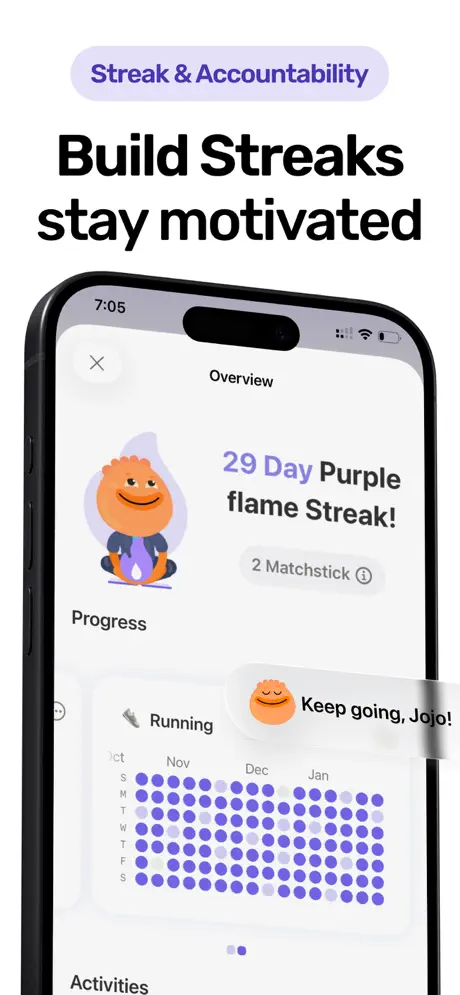
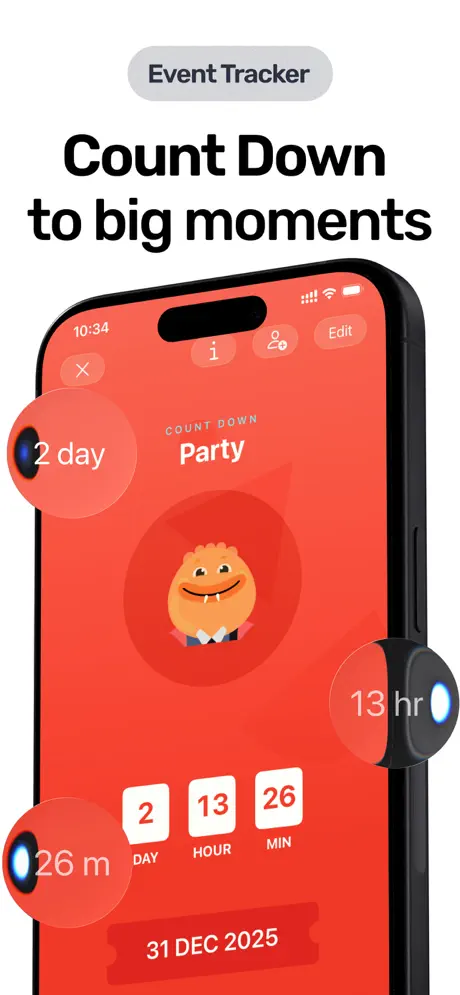
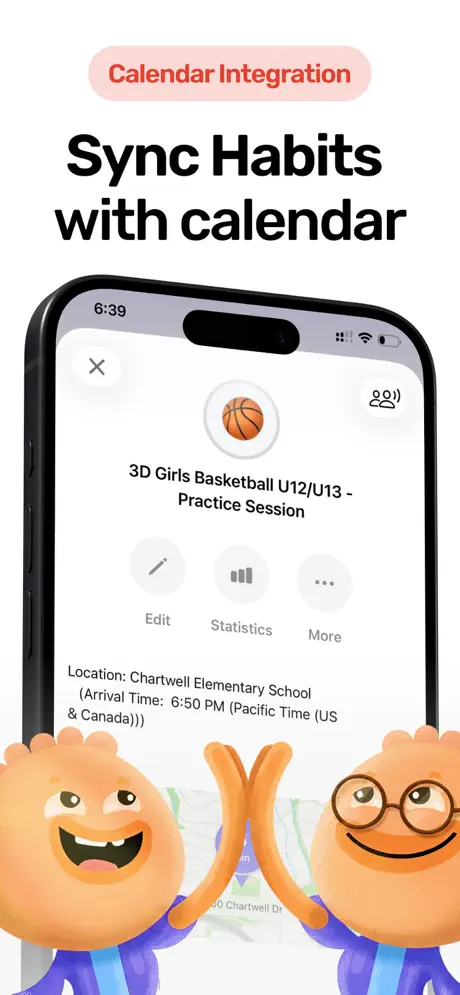
Most self-care apps ask you to do something separate from your life. Open this meditation app. Log your mood in that tracker. Journal in a third one. Habi takes a different approach: it weaves self-care directly into the habits and routines you're already building.
The focus timer is where Habi's self-care angle gets interesting. Start a session and rain begins to fall, or forest sounds fill your headphones. It's not labeled "meditation," but when you sit with ambient sounds for 25 minutes while your phone blocks distracting apps, the effect is the same. One reviewer put it plainly: "The Pomodoro timer keeps me honest when I just need 10 minutes."
Screen time blocking is the self-care feature nobody talks about. If your phone is your biggest source of stress (and for many people, reducing screen time is the single most impactful self-care change), Habi's built-in blocking prevents you from opening distracting apps during focus sessions. You're not just tracking a "less screen time" habit. The app actively enforces it.
Shared habits add accountability without judgment. Invite a friend or family member to a shared self-care routine, and you can see each other's check-ins. As one user described it: "I really love that I am able to organize habits with my friends. Very motivational."
What it does well:
- Ambient soundscapes for mindfulness. Rain, forest, and white noise built into the focus timer. You get a mindfulness break every time you work. No separate meditation app needed.
- Screen time blocking as self-care. Actively blocks distracting apps during focus sessions. Reducing mindless scrolling is one of the most effective self-care habits you can build.
- Gentle, calm design. No streak anxiety, no gamification pressure, no push notifications begging you to come back. The interface is intentionally quiet. When our designer Sarah was mapping this out, the goal was an app that reduces mental noise rather than adding to it.
- Zero data collection. Everything stays on your device and syncs through your personal iCloud. No account required. No email. No analytics tracking.
Where it falls short:
- No dedicated meditation library. The ambient sounds are built into the focus timer, not standalone meditation sessions. If you want guided meditations with instructors, you'll need Calm or Headspace.
- Apple-only. iPhone, iPad, Mac, and Vision Pro. No Android version yet.
Pricing: Free to use. Optional Pro upgrade ($1.99 to $89.99) unlocks extras, but core habit tracking, focus timer, ambient sounds, and screen time blocking all work without paying.
Platforms: iPhone, iPad, Mac (Apple Silicon), Apple Watch, Apple Vision Pro.
Bottom line: If your idea of self-care is building quiet, intentional habits into your existing schedule rather than opening yet another wellness app, try Habi free.
2. Calm - Best for Sleep and Relaxation


If your self-care bottleneck is sleep, Calm is the most established solution. The app built an entire category around Sleep Stories: bedtime narratives for adults, narrated by voices like Matthew McConaughey, Stephen Fry, and LeBron James. It sounds gimmicky until you try it. "Sleep story put me right to sleep last night," one reviewer wrote. Simple and effective.
Beyond sleep, Calm offers guided meditations, breathing exercises, and a Daily Calm feature that delivers a fresh 10-minute meditation every day with rotating themes. The mood logging feature asks how you're feeling when you open the app, then recommends personalized sessions based on your response. Feeling anxious? Here's a grounding technique. Tired? Here's a body scan.
The nervous system support section is a newer addition and genuinely useful for people managing chronic stress. One long-term user described it: "Recently discovered nervous system support section helping with stress management."
But Calm's biggest strength (massive content library) creates its biggest complaint: almost everything sits behind a subscription. And at $69.99 per year, it's one of the pricier options in this list.
What it does well:
- Sleep Stories. Over 100 celebrity-narrated bedtime narratives. Nothing else comes close for adults who struggle to fall asleep. The library is deep and well-produced.
- Mood-responsive recommendations. Log how you feel and the app surfaces five tailored options: meditations, grounding techniques, or breathwork matched to your current state.
- Employer-sponsored access. Many companies offer Calm as a benefit. If yours does, the $70/year question disappears. "Employer offers app; daily use improved mental and physical well-being," one reviewer noted.
Where it falls short:
- Heavy paywall. "I thought I could get nice sleeping noises but all I got were locked noises behind a subscription paywall." This complaint is everywhere in recent reviews. The free tier feels like a demo.
- Billing friction. Multiple users report being charged after canceling during the trial period. Customer support gets mixed reviews at best.
Pricing: Free (limited). Premium: $14.99/mo, $69.99/yr, or $399.99 lifetime. 7-day free trial.
Platforms: iPhone, iPad, Android, Apple Watch.
Bottom line: Calm is the gold standard for sleep and relaxation content. If sleep quality is your primary self-care goal and you're willing to pay for a subscription (or your employer covers it), nothing matches its library. Just be careful with the free trial auto-renewal.
3. Headspace - Best for Guided Meditation


Where Calm prioritizes sleep content, Headspace prioritizes structured meditation education. Founded by Andy Puddicombe, a former Buddhist monk, the app treats meditation like a skill you develop through progressive courses rather than random sessions you pick from a library.
The beginner courses are genuinely excellent. They start with 3-minute sessions and build toward longer, more advanced practices over weeks. You learn techniques like body scanning, noting, and visualization through a curriculum, not just a playlist. A review in American Psychologist found that meditation apps produce modest but consistent reductions in depression and anxiety, with studies showing that even 10 to 21 minutes three times per week can produce measurable results.
The SOS meditations are the standout self-care feature. Three to 12-minute sessions designed for moments of acute stress, panic, or overwhelm. When you're having a bad day and need something right now, not a 30-minute guided journey, these hit the mark.
Headspace also now offers in-app therapy that accepts many insurance plans, bringing sessions as low as $35 each. It's the only app on this list that bridges self-care tools with professional mental health support in a single interface.
What it does well:
- Structured meditation courses. Progressive curriculum from beginner to advanced. You're learning a skill, not just following along. This approach has more staying power than browsing a library.
- SOS sessions. Quick, targeted meditations for panic moments. When your heart is racing at 2 PM, you need three minutes of guidance, not a 10-step menu.
- Student and teacher pricing. $9.99/year for students. Free for teachers in the US, UK, Canada, and Australia. Exceptional value for those who qualify.
Where it falls short:
- Navigation is a mess. "Content is organized makes zero sense. It's really hard to find whatever course" you're working on. Multiple reviewers flag the cluttered interface as a growing frustration, especially after recent updates added AI features.
- AI additions feel unwanted. The Ebb AI companion and AI-generated meditations have drawn criticism from users who came for human-led mindfulness. "Loves the app but strongly opposes AI-generated meditations, citing lack of soul," one reviewer wrote.
Pricing: Free (limited). Premium: $12.99/mo or $69.99/yr (14-day trial). Family: $99.99/yr (6 accounts). Students: $9.99/yr.
Platforms: iPhone, iPad, Android, Web.
Bottom line: Headspace is the best choice if you want to learn meditation systematically, not just listen to ambient sounds. The SOS sessions and therapy integration make it the strongest option for active mental health management. Just brace for a cluttered interface.
4. Finch - Best for Gentle Motivation


Self-care should feel kind. That's the entire thesis behind Finch, and it delivers on the promise. You adopt a virtual bird, complete real-life self-care tasks (stretch, drink water, breathe, journal), and your Finch gains energy, goes on adventures, and grows. Skipping a day has zero consequences. No broken streaks. No lost progress. No guilt.
With a 4.9 rating from over 649,000 reviews, Finch has found a massive audience among people who find traditional productivity apps stressful. The daily check-in asks about your energy level and mood, then offers exercises tailored to how you're feeling: breathing activities, guided stretches, reflective journaling prompts, or gratitude exercises.
One long-term user captured the appeal: "Day 564 of continuously showing up for myself!!" That's the kind of engagement most wellness apps dream about. The virtual pet creates emotional accountability without pressure.
Finch is built by a Public Benefit Corporation, doesn't show ads, and doesn't sell user data. The free tier is generous enough that many users never feel the need to upgrade. For a deeper look at apps similar to Finch, see our Finch alternatives guide.
What it does well:
- Emotional accountability without punishment. The pet mechanic motivates without creating guilt. Missing a day doesn't undo progress. This design choice matters for people dealing with depression or executive dysfunction.
- Built-in self-care exercises. Breathing activities, guided stretches, journaling prompts, and gratitude exercises are all part of the core app. It's not just a tracker; it's a self-care toolkit.
- Customizable and streak-free. You can disable features like streaks entirely. "Very customizable...disable features like streaks," wrote one long-term user who appreciated the flexibility.
Where it falls short:
- Can feel juvenile for some adults. The virtual pet and colorful design attract a younger audience. Some adult users feel self-conscious opening it in professional settings.
- Self-care exercises are surface-level. The breathing and journaling tools are helpful but basic. If you need clinical-grade CBT exercises or deep meditation courses, Finch isn't built for that.
Pricing: Free (generous). Finch Plus at roughly $15/year for extra customization and content.
Platforms: iPhone, iPad, Android.
Bottom line: Finch is the best self care app for anyone who finds traditional wellness apps overwhelming or guilt-inducing. It makes self-care feel like caring for a friend, not completing homework.
5. Bearable - Best for Symptom and Mood Tracking


Most mood trackers ask "How do you feel?" and stop there. Bearable asks "How do you feel, what did you eat, what medications did you take, how did you sleep, what activities did you do?" and then tells you which of those things actually affect your mood.
That correlation engine is what sets Bearable apart. Log consistently for a few weeks, and the app starts surfacing insights like "Your mood tends to be higher on days you exercise" or "Your pain levels correlate with poor sleep." It's the kind of data-driven self-care that gives you actionable information rather than just a mood graph.
For people managing chronic conditions, mental health disorders, or medication changes, Bearable is invaluable. It connects with Apple Health and Google Fit to automatically import sleep, steps, and weight data. You can export reports as PDFs to share with therapists or doctors, giving them concrete data about patterns between appointments.
"The Bearable app is so good it helps me track my anxiety and what might cause it," one user explained. Another, managing bipolar disorder, said the data perspective helped her realize "the bad will not last forever."
What it does well:
- Correlation analysis. Connects the dots between symptoms, mood, activities, medications, and lifestyle factors. You don't just track how you feel; you learn why.
- Clinical-grade data export. Generate PDF reports for therapists. Concrete data about mood patterns is more useful in a therapy session than trying to remember how last week felt.
- Apple Health integration. Automatically imports sleep, steps, and activity data. Fewer things to manually log means higher consistency.
Where it falls short:
- Check-ins take time. "Asked wayyyyy too many questions during check in," one reviewer noted. If you want a 10-second mood log, Daylio is faster. Bearable's depth requires more daily investment.
- Privacy concerns. One user's iPhone App Privacy Report showed the app contacting a Facebook domain. For an app handling sensitive health data, that's worth noting.
Pricing: Free (basic tracking). Premium: $6.99/mo or $34.99/yr (7-day trial). New user discounts up to 76%.
Platforms: iPhone, iPad, Android.
Bottom line: Bearable is the most analytically powerful self-care app on this list. If you want to understand the connection between what you do and how you feel, and you're willing to invest a few minutes per day in detailed logging, nothing else comes close.
6. Daylio - Best for Micro-Journaling


Journaling is one of the most effective self-care practices, but most people don't do it because writing feels like work. Daylio solved this by removing the writing entirely.
Tap an emoji to record your mood (from "awful" to "great"). Tap icons to log what you did (exercise, work, socializing, reading). That's it. The entire check-in takes about 10 seconds. Over time, Daylio builds visual charts showing your mood patterns, which activities correlate with better days, and how your emotional baseline shifts across weeks and months.
The approach works. Users report extraordinary streaks: "Over 400 days consecutive use; 2,500+ day streak now," wrote one reviewer. Another said after five years: "This app changed my life!" When journaling is this frictionless, people actually stick with it.
If you're looking for a low-effort way to start a self-care practice, or if you want data you can bring to therapy sessions (Daylio exports to PDF), micro-journaling is a strong entry point. It's also a useful complement to a dopamine detox, where tracking your mood helps you notice the emotional impact of reducing stimulation.
What it does well:
- 10-second check-ins. Tap a mood, tap activities, done. The lowest friction mood tracker available. When self-care feels effortless, you actually do it.
- Visual mood analytics. Weekly, monthly, and yearly summaries with charts showing mood trends and activity correlations. Beautiful design that makes data easy to read.
- Extreme long-term retention. Multi-year streaks are common. The memories feature shows you entries from exactly one year ago, creating a meaningful reflective practice over time.
Where it falls short:
- Shallow without premium. The free tier covers basic mood logging, but advanced statistics, custom moods, unlimited icons, and cloud backups require the $35.99/year subscription.
- No guided exercises. Daylio tracks your mood but doesn't offer breathing exercises, meditation, or coping tools. It tells you how you feel without helping you change it.
Pricing: Free (basic). Premium: $4.99/mo or $35.99/yr (7-day trial). Premium adds advanced stats, cloud backup, unlimited customization.
Platforms: iPhone, iPad, Android.
Bottom line: Daylio is the best self care app for people who want to start journaling without actually writing. Ten seconds a day builds a surprisingly powerful picture of your emotional life over time.
7. Gratitude - Best for Positive Mindset


Gratitude practice is one of the most research-supported self-care habits, yet most people abandon it within a week because staring at a blank page asking "What are you grateful for?" gets old fast.
Gratitude fixes this with 2,500+ guided journal prompts that rotate daily. Instead of a blank page, you get a specific question: "What small thing made you smile today?" or "Who helped you recently?" The prompts are well-crafted and varied enough that they don't feel repetitive even after months of daily use.
The app goes beyond basic journaling with daily affirmations, a vision board feature for goal visualization, and uplifting stories. One reviewer captured it well: "This app has the cutest quotes and gently prompts you to see small things that make your day good." The aesthetic design helps too: it's visually warm and inviting in a way that makes you want to open it.
The free tier is genuinely useful. Multiple users specifically noted: "Simple journaling with helpful prompts. Free version feels complete without upgrade." That's rare in this category.
What it does well:
- 2,500+ guided prompts. No blank page anxiety. The prompts are specific, varied, and genuinely thought-provoking. They make gratitude journaling feel guided rather than forced.
- Daily affirmations. Curated positive affirmations for mindset shifting. Choose themes that resonate with you, and they show up at times you set.
- Vision boards. Visual goal-setting tool where you build image boards of what you're working toward. Pairs well with the journaling for a full positive mindset practice.
- Generous free tier. Core journaling and prompts work without paying. Users consistently mention the free version feels complete.
Where it falls short:
- Most affirmations are premium. "Most affirmations are locked behind paywall," one reviewer noted. The free selection is limited.
- No customer support. Multiple reports of losing journal entries during phone transfers with no response from the support team. For an app holding personal reflections, that's concerning.
Pricing: Free (core journaling). Pro: $4.99/mo, $9.99/quarter, or $29.99/yr (7-day trial).
Platforms: iPhone, iPad, Android.
Bottom line: Gratitude is the best self care app for building a positive mindset practice. If you want guided gratitude journaling with affirmations and vision boards, it's purpose-built and well-executed.
Which Self Care App Should You Pick?
- If you want self-care woven into your daily habits with ambient sounds and screen time blocking: pick Habi.
- If sleep is your biggest self-care need and you want celebrity Sleep Stories: pick Calm.
- If you want to learn meditation properly through structured courses: pick Headspace.
- If you need gentle, guilt-free motivation and find most apps stressful: pick Finch.
- If you want to understand what affects your mood with data and correlations: pick Bearable.
- If you want to journal without writing using icons and tap-based logging: pick Daylio.
- If you want guided gratitude journaling with affirmations and vision boards: pick Gratitude.
Most self-care routines benefit from combining two tools: one for active practice (meditation, breathing, gratitude) and one for tracking (mood logging, symptom correlation, journaling). Start with whichever addresses your most pressing need, then add a second once the first becomes a habit.
Frequently Asked Questions
What is the best free self care app?
Habi and Finch both offer generous free tiers. Habi gives you unlimited habit tracking, a focus timer with ambient sounds, and screen time blocking at no cost. Finch provides daily check-ins, mood tracking, breathing exercises, and journaling for free. Daylio's free tier covers basic mood tracking with icons. Calm and Headspace lock most content behind subscriptions.
Do self care apps actually work?
Research suggests they can. A review in American Psychologist found that meditation apps produce modest but consistent reductions in depression and anxiety symptoms. A study in JMIR Mental Health showed that mood-tracking apps help users build self-awareness and recognize emotional patterns over time. The key factor is consistency. Apps that make daily check-ins quick and frictionless tend to keep users engaged longer.
What is the difference between a self care app and a habit tracker?
A self care app focuses on emotional well-being through features like mood tracking, meditation, journaling, breathing exercises, and gratitude prompts. A habit tracker logs whether you completed specific tasks and tracks streaks. Some apps bridge both categories. Habi combines habit tracking with self-care features like ambient sounds and screen time blocking. Finch wraps habit completion in a self-care experience. Bearable merges mood tracking with symptom correlation analysis.
Which self care app is best for anxiety?
Headspace offers structured meditation courses and SOS sessions designed for acute anxiety moments. Calm provides guided breathing exercises and body scan meditations. Bearable helps you identify anxiety triggers by correlating symptoms with daily activities and lifestyle factors. Finch offers a gentler approach through daily check-ins and breathing exercises without clinical pressure.
Can I use a self care app with my therapist?
Yes. Bearable and Daylio both let you export mood and symptom data as reports to share with therapists. Bearable is especially useful here because it tracks correlations between your mood, symptoms, medications, and activities. Headspace now offers in-app therapy sessions that accept insurance. Even simple mood logs from Daylio or Habi can give your therapist useful data about patterns between sessions.
Final Thoughts
Self-care isn't one thing. It's mood awareness. It's breathing space. It's blocking your phone when you know scrolling makes things worse. It's writing down one good thing that happened today.
The best self care app is the one you'll actually open tomorrow. Start with the smallest version of the practice you need most: a 10-second mood check in Daylio, a 3-minute SOS meditation in Headspace, or a focus timer in Habi that replaces 25 minutes of scrolling with 25 minutes of ambient rain.
Every app on this list is free to try. Pick one. Use it for a week. If it sticks, you've found your tool. If it doesn't, try the next one. Self-care is too important to skip because the first app you tried wasn't the right fit.