How to Build Habits with ADHD (Backed by Science)
Key Takeaways
- ADHD brains process habits differently. Lower dopamine receptor availability in the reward pathway means motivation works on a different schedule.
- Standard habit advice fails because it assumes reliable executive function. Planning, working memory, and time awareness all operate differently with ADHD.
- "If-then" planning works. Research shows implementation intentions can bring ADHD performance to neurotypical levels on executive function tasks.
- External structure beats internal motivation. Visual trackers, environmental cues, and physical reminders compensate for working memory gaps.
- Start with one habit, not five. Cognitive load research shows ADHD brains face disproportionate performance drops when demands stack up.
"Just do it for 21 days and it becomes automatic." You've heard this advice. Maybe you've tried it. Multiple times. And each time, somewhere around day four or day nine or day fourteen, the habit dissolved. Not because you're lazy. Not because you don't care enough. Because the neuroscience of habit formation works differently in your brain.
ADHD affects roughly 8.7 million adults in the United States alone. Every one of them has been handed the same generic habit advice that was designed for neurotypical brains. That advice relies on assumptions about working memory, dopamine regulation, and executive function that simply don't apply when you have ADHD.
This isn't a motivational article. It's a research-backed guide to how to build habits with ADHD, drawing on peer-reviewed studies from NYU, Stanford, the National Institute on Drug Abuse, and University College London. We'll cover why the standard approaches fail, what the science says actually works, and five practical strategies you can start using today. When our lead designer Sarah was researching habit formation for Habi, the science behind ADHD and habits became one of the most important threads in our product design thinking.
Why Habit Formation Is Different with ADHD
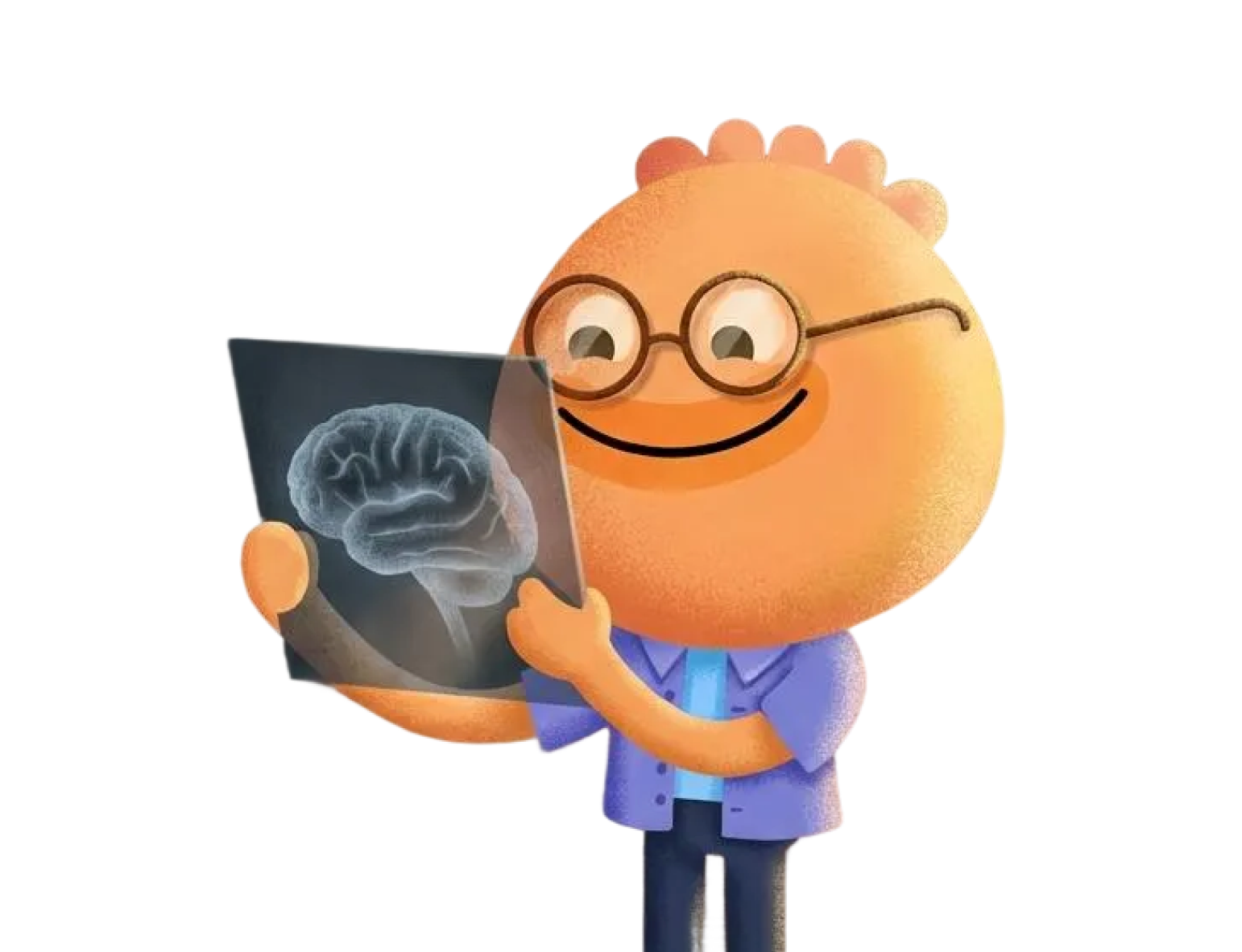
ADHD is not a willpower problem. It's a neurodevelopmental condition that changes how three critical systems operate in your brain: executive function, dopamine regulation, and time perception. Each of these directly affects ADHD habit formation and your ability to maintain routines over time.
Executive Function Deficits
Russell Barkley, one of the leading ADHD researchers, developed the executive function model that frames ADHD as fundamentally a deficit in behavioral inhibition. This cascades into four areas: working memory, self-regulation of motivation, internal self-talk, and the ability to break apart and recombine behaviors. In practical terms, this means the mental infrastructure that neurotypical people use to plan a habit, remember to do it, and stay motivated through the boring middle phase is structurally different in ADHD brains.
Working memory is the one that hits hardest. Research from the University of Central Florida found that when cognitive demands increase, people with ADHD show disproportionate performance declines compared to neurotypical individuals. You might have the intellectual ability to handle a habit routine, but your working memory capacity to juggle it alongside everything else gets overwhelmed faster.
Dopamine Regulation
In 2009, Nora Volkow and her team at the National Institute on Drug Abuse published brain imaging research that changed our understanding of ADHD and motivation. Using PET scans on 53 never-medicated adults with ADHD, they found lower-than-normal levels of dopamine receptors and transporters in the nucleus accumbens and midbrain. These are the exact regions that process motivation and reward.
This has a direct consequence for habits. Neurotypical habit formation relies on a dopamine feedback loop: do the behavior, get a small reward signal, repeat until automatic. With ADHD, that reward signal is weaker. The behavior that felt worth doing yesterday doesn't generate enough dopamine to feel worth doing today. This isn't fickleness. It's brain chemistry.
Edmund Sonuga-Barke at the University of Southampton proposed a dual pathway model showing ADHD involves two independent deficit pathways: executive dysfunction and delay aversion. People with ADHD aren't just bad at planning. They also have a neurological preference for small immediate rewards over larger delayed ones. "You'll feel better in three months" is not a motivating statement for a brain wired this way.
Time Blindness
Barkley coined the term "temporal myopia" to describe how ADHD creates a near-sightedness to future events. Your brain lives in the "temporal now," making it structurally difficult to connect today's action with tomorrow's benefit. This is why habits that require months of invisible progress before any payoff feel nearly impossible. The future reward simply doesn't register in the present moment with enough force to drive behavior.
| Habit Formation Factor | Neurotypical Brain | ADHD Brain |
|---|---|---|
| Working memory | Can hold the habit plan while doing other tasks | Habit plan competes with every other demand and often loses |
| Dopamine reward signal | Consistent small reward from each repetition | Weaker, inconsistent signal that varies day to day |
| Time perception | Can connect today's effort to future benefit | Future benefits feel abstract and distant (temporal myopia) |
| Motivation source | Internal goals sustain effort over weeks | Requires external structure and immediate feedback |
| Consistency | Can maintain same routine with moderate effort | Consistency fluctuates with interest, energy, and novelty |
| Response to missed days | Resumes with mild friction | Missed days trigger shame spirals and abandonment |
None of this means you can't build habits. It means the standard playbook was written for a brain that works differently from yours. You need strategies designed for how your brain actually operates.
The Science of What Actually Works

Forget the generic advice. Here's what controlled research has shown to be effective specifically for brains with executive function challenges.
Implementation Intentions ("If-Then" Planning)
This is the single strongest piece of ADHD-specific evidence in the habit formation literature. Caterina Gawrilow at the University of Tubingen, working with Peter Gollwitzer at NYU, ran controlled experiments with children who had ADHD. The results were striking.
Children who formed simple "if-then" plans ("If I hear a sound, then I will not press any key") improved their impulse control to the same level as children without ADHD. In a delay-of-gratification task, children using if-then planning earned 5.54 euros out of 6 possible, compared to 3.35 euros in the control group. The technique effectively eliminated the typical ADHD impulsivity deficit on these tasks.
The mechanism matters. Implementation intentions shift control from top-down processing (which requires executive function) to bottom-up processing (which is automatic). You're not relying on your prefrontal cortex to remember and decide in the moment. You're pre-loading the decision so the environment triggers it for you. For ADHD brains, this is a fundamental strategy shift: stop trying to remember what to do and start setting up automatic triggers.
External Structure over Internal Motivation
Barkley's recommendation appears consistently across his publications: since internal executive functions are impaired, the solution is to externalize information. Fill your environment with physical cues that serve as surrogates for the internal cues that are unreliable. Visual timers. Checklists. Color-coded systems. Sticky notes. Anything that makes the invisible visible.
This isn't a workaround. It's actually how all habits work at a neurological level. Wendy Wood's research at USC showed that habits are "response dispositions activated automatically by context cues." The difference is that neurotypical people can eventually internalize those cues. People with ADHD may need external cues for longer, or permanently. And that's completely fine. It's not a crutch. It's a tool calibrated to your neurology.
Micro-Habits
BJ Fogg at Stanford's Behavior Design Lab developed the Tiny Habits method -- the science behind micro-habits -- around a simple model: Behavior happens when Motivation, Ability, and a Prompt converge at the same moment. If any element is missing, the behavior doesn't happen.
For ADHD, the "Ability" component is critical. Fogg identifies six factors that affect ability, including "brain cycles" (mental effort) and "non-routine" (how different the behavior is from what you normally do). Both of these are especially constrained with ADHD. The solution: make the habit so small it requires almost no motivation. Not "meditate for 20 minutes." Rather: "sit on the meditation cushion for 30 seconds." This is the core principle behind the 2-minute rule for habits, and it's especially powerful for ADHD brains where the activation energy for starting is the biggest barrier. CHADD (Children and Adults with ADHD) explicitly recommends Fogg's method, noting that reducing the stress response of large behavior changes is particularly important for people with executive function challenges.
Visual Cues and Tracking
Working memory deficits mean your brain is less reliable at tracking what you've done and what you haven't. Research on working memory in ADHD from Castellanos and Tannock (2002) at NYU established working memory deficits as a core feature of ADHD. External tracking tools serve as a surrogate for this internal system.
A study published in Frontiers in Behavioral Neuroscience found that incentives improved working memory performance in both ADHD and control groups, but the improvement was larger in the ADHD group. Visual evidence of progress (streaks, counters, charts) provides exactly this kind of external incentive. Each check mark on a tracker is a small dopamine hit that your reward system can actually register.
Dopamine-Friendly Rewards
Given the lower dopamine receptor availability documented by Volkow's research, ADHD habit strategies need to front-load rewards. Not "you'll feel healthier in six months." Rather: "after you complete this habit, you get 10 minutes of your favorite show." Immediate. Concrete. Guaranteed.
This isn't childish or indulgent. It's neurologically necessary. Sonuga-Barke's dual pathway model shows that delay aversion is an independent deficit pathway in ADHD. Strategies that bridge the gap between action and reward are directly compensating for a real neurological difference. The reward doesn't have to be big. It has to be now. If you're interested in the broader science of how dopamine drives habit formation (and how overstimulation can hijack it), our deep dive on what a dopamine detox really is separates the neuroscience from the hype.
5 Strategies for Building ADHD-Friendly Habits

Strategy 1: Start with One Habit (Not Five)
This is not general advice. This is backed by specific cognitive load research. Rapport and Kofler at the University of Central Florida found that when task demands increase, ADHD brains show disproportionate performance drops. Adding multiple new habits simultaneously creates compounding demands on an already-constrained working memory system.
Each new habit requires conscious attention and decision-making until it becomes automatic. For ADHD brains, this pre-automaticity phase is especially resource-intensive. Starting with one habit means directing your full (albeit limited) cognitive budget at a single behavior change. Clinical estimates from the Attention Deficit Disorder Association suggest it takes people with ADHD roughly 3 to 5 months for behaviors to become automatic, compared to the general population median of 66 days. That's a long time to maintain conscious effort on multiple fronts.
Pick one habit. Make it small. Get it running before adding the next. This isn't slow progress. It's the fastest path that actually works. If you've experienced the cycle of enthusiastically starting multiple habits and burning out within weeks, our guide on habit tracking without burnout explains exactly why that happens and how to prevent it.
Strategy 2: Anchor to Existing Routines (ADHD-Adapted Habit Stacking)
Habit stacking pairs a new behavior with something you already do automatically, so the existing habit becomes the trigger for the new one. Wendy Wood's research at USC confirmed that context cues, not goals, automatically trigger habitual behaviors. For ADHD, this is particularly powerful because it eliminates the working memory burden of remembering when to do the new habit.
The ADHD adaptation: keep the stack extremely short. Research suggests you can add up to three new behaviors in a chain before an existing anchor, but for ADHD, one addition is the right starting point. "After I brush my teeth" (existing) "I will take my vitamin" (new). That's it. Not a morning routine of seven steps. One addition to something that already happens on autopilot.
If you want to understand the deeper science of how to build habits that stick, we've covered the three phases of habit formation in a separate guide. The anchoring principle works the same way for everyone. ADHD just requires smaller units per chain.
Strategy 3: Use a Visual Tracker for External Accountability
This strategy directly addresses the working memory and dopamine deficits documented in ADHD research. A visual tracker does three things at once:
- External memory: It removes the question "did I do this today?" from your working memory. The answer is on the screen or the wall.
- Immediate dopamine: Checking off a habit produces a small, immediate reward signal. That's the front-loaded dopamine your brain needs.
- Loss aversion: Once you have a streak worth protecting, the pain of breaking it outweighs the momentary friction of doing the habit. This is a psychological lever that works independently of motivation.
A meta-analysis of over 19,000 participants found that self-monitoring significantly increases goal attainment regardless of other interventions. For ADHD brains, where internal monitoring is less reliable, external tracking isn't optional. It's a core strategy. A simple habit tracking app like Habi that counts your days and celebrates milestones can serve as that external system. Curious about other options? We compared the best habit tracker apps side by side.
Strategy 4: Build in Immediate Rewards
Volkow's PET imaging research showed that achievement motivation was significantly lower in ADHD participants, with scores correlating directly with dopamine receptor availability in the reward pathway. Standard habit advice says the habit itself should become the reward over time. That's true eventually. But in the early weeks and months, ADHD brains need something more concrete.
Pair each habit completion with something your brain actually wants right now:
- Finished your workout? 15 minutes of your favorite podcast (only allowed after the workout).
- Completed your morning routine? Check your social media guilt-free for 10 minutes.
- Logged your habit in your tracker? Watch the streak number go up (yes, this counts as a reward).
- Hit a weekly milestone? Treat yourself to something small and specific you've chosen in advance.
The reward needs to be immediate (not "at the end of the month"), specific (not "something nice"), and genuinely enjoyable (not what you think you should enjoy). This is the principle of identity-based habits in action: you're reinforcing the neural pathway that connects the behavior with positive outcomes until the identity shift catches up.
Strategy 5: Plan for Failure with "Habit Repair"
Over 90% of people attempting behavior change experience at least one relapse. For ADHD, with its inconsistent motivation and fluctuating executive function, missed days are not just likely. They're guaranteed. The strategy isn't preventing failure. It's building a repair protocol so failure doesn't become abandonment.
This is where implementation intentions come back. Pre-plan your response to common failure scenarios:
- "If I miss a day, then I will do a 30-second version of the habit the next morning."
- "If I miss three days in a row, then I will text my accountability partner and restart, not quit."
- "If I feel the shame spiral starting, then I will remind myself that Lally's research shows missing one day has no significant effect on habit formation."
The all-or-nothing thinking pattern is especially dangerous with ADHD. One Reddit user described spending seven months in rigid self-improvement, then relapsing on everything simultaneously when the streak broke. The antidote is building flexibility into the system from day one. A habit tracker that doesn't punish you for missed days (no guilt screens, no broken streak messages) supports this approach. Your goal is consistency over time, not perfection every day.
What to Look for in an ADHD-Friendly Habit Tracker

Not every tracker is built for ADHD brains. Some create more friction than the habit itself. Based on the research above, here's what actually matters:
Low friction to log. If it takes more than 5 seconds to mark a habit complete, the executive function tax is too high. One tap. Done. Any app that requires you to navigate three screens to log a habit is working against ADHD neurology.
Visual streaks and progress. This is your external dopamine system. A counter that climbs, a streak that grows, milestones that trigger celebration. These visual elements serve as the immediate reward signal that compensates for lower dopamine receptor availability.
Reminders without overwhelm. One gentle notification at the right time helps. Twelve notifications across the day creates noise. The best approach is a single, well-timed reminder anchored to the routine you've chosen as your habit stack trigger.
Flexibility for missed days. A tracker that resets your streak to zero after one missed day activates the exact shame spiral that derails ADHD habit building. Look for trackers that emphasize overall progress (total days completed) rather than perfect consecutive streaks.
Simplicity over features. ADHD brains are drawn to novelty, which means feature-packed apps can become a source of distraction rather than a tool for focus. A tracker with a clean interface and a clear purpose reduces the cognitive load of using the tool itself.
When we built Habi, Sarah designed the tracking experience around these exact principles. Simple check-in. Visual counter. Milestone celebrations. No guilt for missed days. Your data stays on your device. It's free, and it takes less than two minutes to set up your first habit. If you're also looking for a focus method that accommodates ADHD attention patterns, our Pomodoro vs. Flowtime vs. Time Blocking guide compares three approaches with specific notes on which works best for ADHD brains.
Frequently Asked Questions
Can people with ADHD build habits?
Yes. People with ADHD can absolutely build habits. The process takes longer and requires different strategies than neurotypical approaches, but the underlying neuroscience of habit formation still applies. Research from Gawrilow and Gollwitzer showed that specific techniques like implementation intentions can bring ADHD performance to neurotypical levels on executive function tasks. The key difference is relying on external structure, visual cues, and environmental design rather than willpower and internal motivation.
How long does it take to form a habit with ADHD?
The general population average is 66 days, based on Phillippa Lally's 2010 study at University College London, with a range of 18 to 254 days. For people with ADHD, clinical estimates from the Attention Deficit Disorder Association suggest 3 to 5 months (roughly 106 to 154 days) for behaviors to become automatic. The longer timeline reflects the additional challenges of inconsistent repetition, working memory deficits, and variable motivation. Simple habits anchored to existing routines will form faster than complex standalone behaviors.
What are the best habits to start with if you have ADHD?
Start with one small habit that takes less than two minutes and can be anchored to something you already do consistently. Good starting habits: drinking a glass of water after waking up, doing a 60-second stretch after brushing your teeth, writing one sentence in a journal after your morning coffee. The habit itself matters less than building the proof that you can maintain a routine. Once one habit sticks, use that confidence to add the next. For more ideas organized by category, check our guide to the best habits to track.
Does habit tracking help with ADHD?
Research strongly supports visual tracking for ADHD. Because ADHD involves working memory deficits, external tracking tools serve as a surrogate for the internal monitoring systems that are less reliable in ADHD brains. Russell Barkley recommends filling the environment with physical cues that replace ineffective internal ones. A visual tracker provides external accountability, immediate dopamine feedback through streaks and milestones, and concrete evidence of progress that doesn't rely on memory. A meta-analysis of 19,000+ participants found that self-monitoring significantly increases goal attainment.
Final Thoughts
ADHD doesn't mean you can't build habits. It means the system needs to match your brain, not the other way around. The research is clear: use if-then planning, externalize everything, start impossibly small, reward yourself immediately, and build repair protocols for the inevitable stumble.
You don't need more discipline. You need better tools. Tools that work with your dopamine system instead of against it. Tools that handle the remembering so your working memory can focus on living.
Start with one habit today. Make it tiny. Anchor it to something you already do. Track it visually. And when you miss a day, pick it back up without the shame. That's not failure. That's the system working.
If you want a simple way to start tracking, download Habi. Set up one habit. Watch the number climb. That number is not just a counter. It's evidence that your brain can do this, in its own way, on its own timeline.